KEO-Sustainability1_1000x600.jpg

August 24, 2023 valueeng0

It’s a well-known fact that the built-environment is responsible for 40% of all annual global greenhouse gas emissions (GHGe). Breaking that figure down, building operations are responsible for 27% annually, while building and infrastructure materials and construction (embodied carbon) are responsible for an additional 13%.

In addition, according to the IEA Energy Technology Perspectives 2020 report, by 2040 approximately 2/3 of the global building stock will be structures that exist today. This means without action to decarbonise existing stock across the globe, these buildings will still be emitting CO2 emissions in 2040, which will negatively influence countries’ chances of achieving the Paris Agreement’s goal of limiting the rise in global temperature to 1.5-degrees Celsius compared to pre-industrial levels.

Over the last few years, the built environment has taken steps to decarbonise and awareness about the need to limit GHGe across the sector is continuing to grow. KEO has, over the past several years, taken major steps to decarbonise with regards to its projects and has a fully-fledged Net Zero strategy in place.

Asked to outline key points of the strategy pertaining to buildings and infrastructure, KEO’s sustainability team notes, “The industry faces both opportunities and challenges in its quest for a Net Zero carbon future by 2050. At KEO our approach starts with proactive communication with our clients and stakeholders to fully understand their decarbonisation plans and pathways. Collaboration and thorough discussion are important elements, given the paradigm shift needed to deliver projects which achieve long-term sustainability targets.”

“Drawing upon our extensive experience, KEO has developed numerous Net Zero strategies, enabling us to identify common steps that can be customised to align with the unique purpose and requirements of each project. We focus on understanding how the real estate or infrastructure asset needs to operate to achieve maximum efficiency during their operation and full lifespan. We then focus on maximising efficiency in design and construction using our comprehensive understanding of the entire process and utilising the latest digital technology platforms.”

KEO’s experts say that the firm leverages proprietary digital tools such as iCRBN and GreenPort for assessing city-wide strategies and measuring on-site emissions and the environmental aspects of projects respectively.
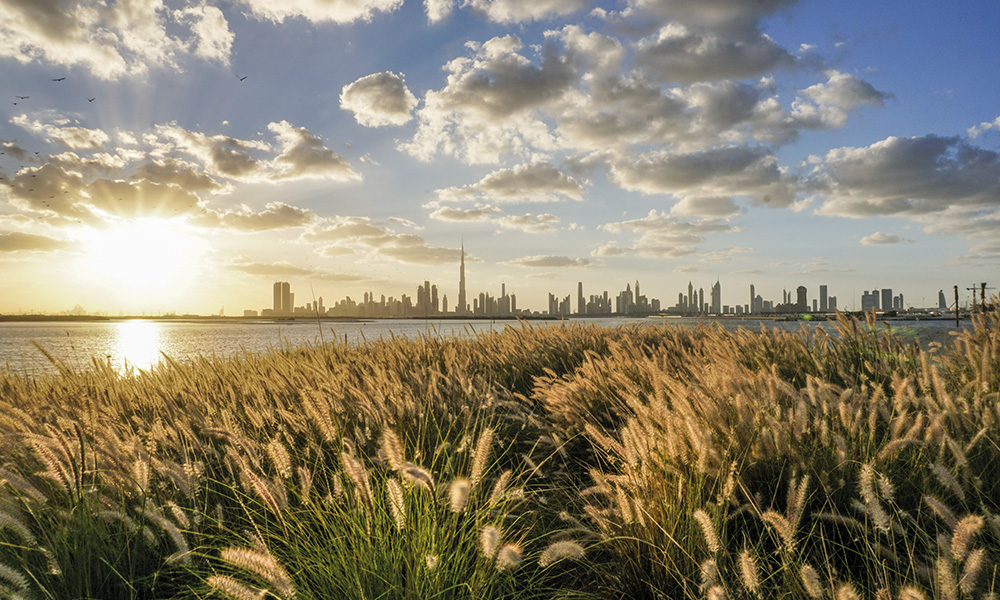
“We focus on shifting to lower-energy consumption solutions and encouraging the adoption of electric vehicles as an additional consideration. By incorporating smart technologies, monitoring systems, and renewable energy sources, we can further reduce energy demand. We carefully consider materials with a low embodied carbon impact aiming to minimise the environmental footprint of our projects,” the team explains.

Discussing where opportunities lie and highlighting positive results the firm has tracked as a result of its strategy and techniques, the team comments, “The pursuit of Net Zero carbon in real estate and infrastructure projects presents numerous opportunities for positive change across various design dimensions, as teams work collectively to increase efficiencies and drive impactful transformations. Positive results include reduced project life cycle costs, reduced energy costs and increased carbon savings. In many new projects, we have provided strategies towards decarbonisation, which have resulted in projected energy and carbon reduction of 35% to 55%, compared to similar conventional buildings of a similar budget.”

“For more advanced Net Zero interventions, we have developed ‘blueprints’ with the net energy reduction being equal to 85% – 100%. By optimising solutions, we also see improved indoor air quality, and other enhancements in quality of life,” KEO’s sustainability experts point out.

“Consideration of compact and human-centred designs can create environmentally friendly cities with an overall low footprint. Remodelling and retrofitting existing assets – especially those that are considered ‘stranded assets’ – can be a cost-effective way to reduce carbon emissions and increase the valuation of the asset. The shift towards low embodied carbon materials and lower energy consumption construction practices can benefit the environmental conditions of the wider industry.”

Outlining the roadblocks that they see with regards to achieving Net Zero across buildings and infrastructure, KEO’s sustainability team explains, “In many cases, projects’ budgets limit the willingness for decarbonisation, however, we are seeing green financing becoming more readily available for LEED Gold and LEED Platinum new builds. As a LEED Proven Provider for the BD+C rating system family, KEO has the experience to deliver such buildings. Similarly, for infrastructure projects under ENVISION and BRE Infrastructure certifications.”

The team outlines that there are several technical approaches that can be employed today; comprehensive operational modelling at the start of the concept design stages can play a crucial role in identifying areas of improvement in both infrastructure and buildings.

“Through KEO workflows and by using integrated design solutions, we find opportunities to optimise a building’s electromechanical systems and infrastructure operational requirements and regimes. We recognise the value of BIM, in enabling accurate modelling of spaces and environments, which helps in accurate performance simulations, ensuring that infrastructure projects and new and retrofitted buildings have optimised operational strategies, processes, and spaces. With the move towards Digital Twins, we can now access live data from operational sensors to enable real-time issue identification and an almost automatic optimisation of energy performance. Finally, we have noticed that sharing best practices and case studies can be a catalyst for driving innovation and inspiring clients to pursue low emissions, high positive impact projects,” says the team.

Coming Together as a Sector

While built environment stakeholders have taken steps to decarbonise and achieve Net Zero, global events such as COP28 could potentially rally efforts across the sector.

Sharing expectations in terms of the impact COP28 may have on the built environment, KEO’s experts state, “COP28 can have a profound impact on the built environment in the UAE and the wider region. We look forward to seeing international cooperation, and further commitments of nations to more ambitious targets, with specific policies, and strategies for achieving Net Zero carbon emissions goals.”

“We also want to see the adoption of significant policy decisions, providing frameworks for policymakers and developers to implement measures promoting sustainable buildings and infrastructure. It will also be interesting to see how COP28 can scale up financing for sustainable projects, supporting new and existing cities, developers, and suppliers to implement more impactful measures, promoting better lifestyles, and having a Net Zero-carbon supply chain, the latter at least within the medium to long term period. COP28 has great potential to provide significant progress in comparison to COP26 and COP27 by supporting further advancements in sustainable projects through collaboration, the push of technological innovation, and wider public involvement and engagement.”

While much has been done to decarbonise the built environment, there are still critical issues that the sector must urgently address. In fact, the team notes that construction stakeholders should come together around two main issues: the integration of technical expertise and innovative financing mechanisms. They add that KEO is well-equipped to provide support in both areas.

“Collaboration is essential in orchestrating efforts among parties such as consultants, architects and engineers, contractors and developers, especially when the focus is on technical delivery and the achievement of highly rated projects under LEED or ENVISION and BRE Infrastructure certifications. We are actively engaged in delivering such projects, and we have developed a clear and effective approach to achieve these goals. By adopting a collaborative approach, sustainable solutions can be comprehensively integrated into every stage of a project, from its inception to financing and actual delivery. KEO has successfully utilised Integrated Design Process (IDP) principles in highly sustainable projects, achieving a high success rate.”

“Additionally, we have witnessed the emergence in the market of specialised financial instruments aimed at supporting sustainable initiatives. These include green bonds, high-ranked sustainability certification linked loans, corporate sustainable financing, and some impact investment funds. However, accessing financing instruments typically adds an additional level of environmental, social, and governance (ESG) due diligence, which is relatively new to the Middle East construction sector. KEO is currently supporting its clients in aligning with international financing institution requirements such as the International Finance Corporation Performance Standards and Equator Principles, readying them for future investment should the opportunity arise.”

KEO’s sustainability team says, “By combining technical proficiency and financial needs compliance in early project discussions, the widespread adoption of Net Zero carbon projects can be facilitated, expediting the transition toward long-term sustainability targets.”

The built environment comprises complex supply chains, which are essential to delivering buildings and infrastructure and, as a result, it’s critical that they also decarbonise and join in the pursuit for Net Zero. In this respect, there are several challenges including the reduction of embodied carbon emissions of concrete.

“Key challenges include finding low-carbon alternatives, optimising transportation and logistics from manufacturing facilities to projects, adopting energy efficiency practices during manufacturing and construction, promoting circular economy principles by implementing effective waste management systems, fostering collaboration among the supply chain, and addressing cost disparities for sustainable options,” remarks the team.

Here, key built environment stakeholders, including government, developers, consultants and contractors, can play a part in influencing the supply chain to adopt sustainable principles, in support of a Net Zero future.

The team adds, “Clients and contractors can support the supply chain by setting clearer targets, prioritising sustainable procurement, sharing knowledge, evaluating, and selecting the supply chain based on sustainability criteria among technical and financial, and monitoring the supply chain performance. Establishing long-term partnerships can also help a lot.”

“Designers and consultants can drive change by specifying low-carbon systems and materials and focusing their delivery on sustainable practices in project requirements and specifications. Clients, contractors, consultants, and regulators, all together, can create market demand, foster innovation, and hold the supply chain accountable to its merits. By working in tandem, all of us can pull the supply chain towards contributing to a more sustainable built environment and supporting infrastructure.”

Government Influence

Countries across the Middle East have launched initiatives that align with the Paris Agreements, and are taking active steps to decarbonise and achieve Net Zero. Several have even unveiled ambitious Net Zero targets including the UAE, which as part of its UAE Net Zero 2050 initiative, aims to be the first country in the MENA region to achieve Net Zero by 2050. Across the world, legislation in support of Net Zero is being rolled out and KEO’s team believes that this is critical to driving tangible change.

“Government legislation can play a key role in driving decarbonisation efforts in both the built environment and infrastructure. But, by government legislation, we don’t mean taxation. Countries such as the USA, UK, Japan, Singapore, and the European Union, have implemented notable measures for moving forward with sustainability and decarbonisation.”

Asked to share their thoughts on what the built environment requires from governments to drive greater Net Zero action, the team responds, “Governments must establish a comprehensive set of policies that include even clearer, and more ambitious, targets for carbon reduction. Such policies may include the development of carbon emissions limits for various industries and the data on the carbon intensity of the power grid on an annual basis. It means also setting continually increasing energy efficiency standards for all industries in predefined times during the next twenty years.”

“There is also a need for local industries to advance on decarbonisation and the government can push forward new technologies, while industrialists can reduce costs due to scalability; another opportunity could be the allocation of funds for R&D in the built environment and infrastructure sectors.”

The sustainability team continues, “As taxation may not be the right way forward, streamlining green permitting and regulatory processes is important to increase the number of sustainable projects. Other focus areas that we have seen significant progress on in the UAE during the last months are the improvement of knowledge-sharing, industry collaboration and capacity building.”

Technology could also have a significant impact on the built environment with regards to its quest to usher in a Net Zero future. BIM has already significantly enhanced the delivery of projects, however new systems and technology could have a pronounced impact with regards to the delivery and operation of assets.

Discussing technology and its potential impact on sustainability, KEO’s experts say, “Artificial intelligence (AI) can help to identify inefficiencies and support to suggest further efficiencies in the design and resource allocation. AI tools that can make ‘more accurate’ energy profile projections, optimise building operations, and assist in supply chain logistics are near the stage of commercial use. AI can also facilitate life cycle assessments and support more robust decision-making procedures. We need to understand that overall, by leveraging AI tools and technologies, the industry can make more informed decisions, and reduce carbon emissions by adjusting advanced computational modelling capabilities in shorter timespans.”

“As the transition to a Net Zero carbon future will be executed in parallel with AI advancements, we’re sure that there will be significant benefits of using the technology. It is difficult however to see how AI can replace humans on developing and delivering real-estate and infrastructure projects, as AI cannot replace human consciousness and appraisal of aesthetics.”

KEO is actively exploring and embracing multiple avenues through which AI can contribute to our work. From design and engineering to project management and sustainability, we recognise the potential of AI to revolutionise various aspects of our operations, they add.

“Reducing GHGe requires a coordinated approach; we all need to cooperate to leverage and scale up any effort for the delivery of a sustainable future,” concludes KEO’s sustainability team.

The post Getting serious about sustainability appeared first on Middle East Construction News.

Source: MEConstructionNews

LT-Cobod-India1_1000x600.jpg

August 24, 2023 valueeng0

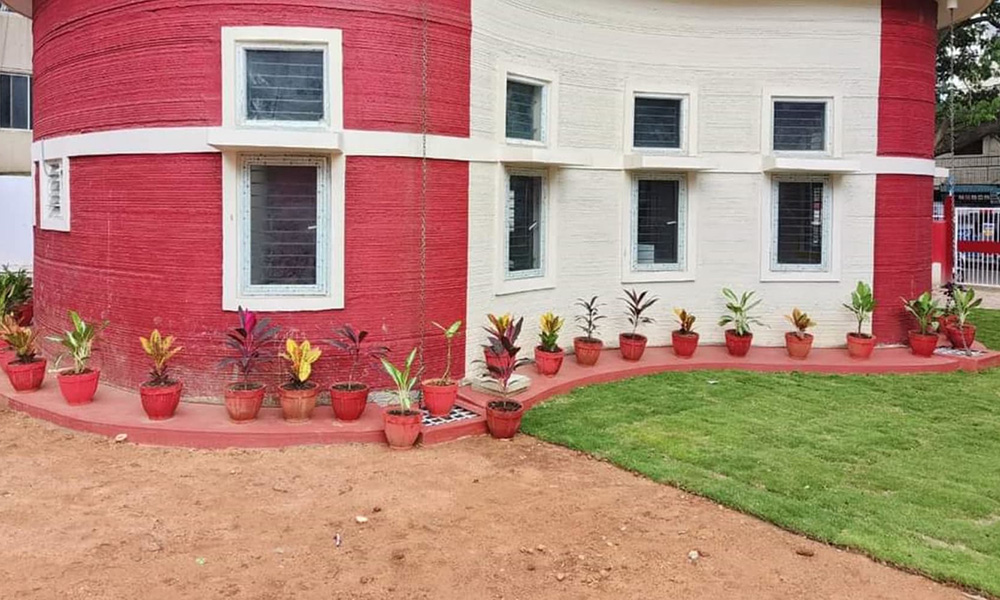
L&T Construction has announced that it has used COBOD technology to deliver a 3D-printed post office in Bengaluru, India. The technology is said to have reduced the delivery time by 80% and costs by 40%.

“It is because of the robotic intervention that involves pre-embedded designs, that we were able to complete the entire construction activity in a period of 43 days as compared to about 8 months taken by the conventional method,” stated George Abraham, Head of Operations at L&T.

The 3D printed post office is said to be the first in India. The project has a total floor area of 1,021sqft and is said to have been delivered at a cost of $31,200. Using COBOD’s 3D printing technology, the project took 43 days to complete.

“Every Indian would be proud to see India’s first 3D printed Post Office at Cambridge Layout, Bengaluru. A testament to our nation’s innovation and progress, it also embodies the spirit of a self-reliant India. Compliments to those who have worked hard in ensuring the Post Office’s completion,” said Indian Prime Minister Narendra Modi via a social media post.

L&T said that the project would have taken eight months to deliver, had it used traditional delivery methods.

The post L&T Construction delivers India’s first 3D printed post office appeared first on Middle East Construction News.

Source: MEConstructionNews

wind-farm_1000x600.jpg

August 24, 2023 valueeng0

Construction works on the 49-turbine North Kyle Wind Farm in East Ayrshire, Scotland has begun according to Jones Bros Civil Engineering UK. The company has been appointed as principal contractor for the US $381mn project near Dalmellington.

According to the firm, the project will have the capacity to power more than 160,000 households. The firm completed enabling works in May, which included the construction of the SP Energy Networks (SPEN) substation platform and construction compound.

The Brockwell Energy-led development, which was first devised in 2016, is said to be capable of generating 220.5MW of renewable energy, with plans to provide $82.7mn in community benefits over 40 years.

“This is our 20th Scottish wind farm, and it is of national significance in terms of scale, which is proof of our strong reputation in the sector. Our highly skilled team has already been hard at work, which has allowed us to hit the ground running on the main bulk of the project,” stated Garod Evans, Contracts Director, Jones Bros Civil Engineering UK.

Scheduled activity for the contractor includes constructing reinforced concrete foundations, excavating, and backfilling for cabling, as well as creating 24km of new access tracks and upgrading a further 20km to allow for turbine and transformer delivery.

The post Construction works begin on 220.5MW North Kyle Wind Farm appeared first on Middle East Construction News.

Source: MEConstructionNews

Amer-Khansaheb.jpg

August 23, 2023 valueeng0

The Real Estate Industry, as the foundation of modern economies, has been undergoing constant evolution. Among the several new trends influencing its growth, market dynamics, economic directions, and technology play significant roles, but none is more crucial than the evolving preferences of customers.

At the forefront of priorities is a deep understanding of customer preferences, encompassing factors such as location, property design, innovative technical features, and environmental considerations. These preferences directly impact property demand, value, and overall market direction. To stay adaptable in a dynamic market like Dubai – UAE, it is imperative to proactively consider these evolving demands, recognising both new opportunities and challenges that arise. By embracing consumer-driven insights, we can foster a thriving Real Estate ecosystem that resonates with the needs of our clients and continues to propel the industry forward.

Dubai’s Real Estate Market has experienced a substantial expansion in recent years due to its status as a major global business hub and tourism destination. As per a tweet by H.H. Sheikh Maktoum Bin Mohammed bin Rashid Al Maktoum, Deputy Ruler of Dubai and Deputy Prime Minister and Minister of Finance of the UAE, Dubai’s Real Estate Market witnessed tremendous growth in the first quarter of 2023. The value of Real Estate transactions in the Emirate during the period impressively increased by a significant 80 per cent as compared to the same period last year, reaching a staggering figure of AED 157 billion. These statistics clearly demonstrate the pace at which the market is expanding and the opportunities it offers to market players.

The Real Estate Market caters to a wide range of customer needs due to its expat-friendly environment including sustainability, technical advancements, and lifestyle changes. Customer’s preferences are constantly evolving, and the most prevalent change is an interest in digital platforms that are being driven by their way of life. In today’s fast-paced world, individuals are actively looking for facilities that make their lives less complicated and more flexible. Customers are seeking spaces with integrated smart technologies that offer easy access to information or services at the touch of a button. Buyers are increasingly looking for eco-friendly and energy-efficient residences due to the growing importance of sustainability on a global scale. Furthermore, in Dubai’s Real Estate Market, there has been a continuous rise in demand for opulent homes with a variety of amenities, spacious interiors with more bedrooms, and distinctive outdoor areas.

According to the latest trends, homebuyers and investors are now seeking long-term investments, especially ownership of rental homes. According to data from the Real Estate search engine Property Finder, apartments were favoured by 58.2 per cent of purchasers in April 2023, followed by villas and townhouses, which accounted for 41.8 per cent of the demand. This new market scenario suggests a rise in the demand for larger areas, high returns on investments, and sustained growth in mortgage transactions. In order to remain competitive in the Real Estate industry, we understand how critical it is to comprehend and address the changing buyer preferences.

In line with our efforts to cater to evolving customer needs, we are committed to elevating our customers’ quality of life through delivering unparalleled offerings of top-notch living conditions, and a diverse range of exceptional services and experiences, while adhering strictly to global standards and best practices. For instance, we are working on implementing infrastructure upgrades within Motor City to bring in more greenery, reduce power consumption, and enhance pedestrian and cycling mobility across the city. All of which aim to produce a better living experience and reduce the carbon footprint of the city. We have carefully planned customer-centric activities that centre on the current global trend of increased sustainability consciousness.

Currently, the Real Estate sector is experiencing a wave of innovation driven by changing consumer needs. As the global consumer community becomes more environmentally conscious and tech-savvy, it pushes industry players to innovate their products and services to be more sustainable, energy-efficient, and technologically advanced. To stay ahead of the evolving market landscape, Real Estate developers and industry professionals are now focussing on flexible and versatile properties.

The post Shifting customer demands sparking transformation in real estate market strategies appeared first on Middle East Construction News.

Source: MEConstructionNews

JLT-Lake_1000x600.jpg

August 23, 2023 valueeng0

The Central Bank of the UAE’s public budget reached an all-time high of AED650bn (US $177bn) by the end of June 2023.

Its latest report shows that a monthly increment of 0.2% led the public budget to rise to AED649.42bn at the end of June, compared to AED648.12bn in the month of May, an increase of AED1.3bn within one month.

On an annual basis, the central bank’s public budget surged by 32.15%, equivalent to AED158bn, in contrast to some AED491.4bn in June last year.

This momentum extended into the current year with a 17.5% rise since the start of the year, compared to some AED552.5bn at the end of December 2022, an increment of AED97bn during the year’s first half.

Other key statistics included:

  • Investments held until maturity were earmarked at AED211.32bn, while deposits accounted for AED135.34bn
  • Loans and advances received an allocation of AED4.18bn, and other assets were assigned AED41.38bn
  • Conversely, on the liabilities and capital side, AED284.78bn was allocated for current and deposit accounts
  • Cash permits and Islamic deposit certificates were assigned some AED205.72 billion

The 2023 H1 figures represent the largest sums ever recorded, pro rata, by the nation’s Central Bank.

The post UAE Central Bank budget reaches record levels in H1 appeared first on Middle East Construction News.

Source: MEConstructionNews

KAFD-2.jpg

August 23, 2023 valueeng0

Parsons says it has won a five-year contract with King Abdullah Financial District Development and Management Company (KAFD DMC) to lead the expansion of KAFD in “new, undeveloped land”.

KAFD features 1.6 million square meters of state-of-the-art office space, world-class facilities, and luxury residences. Described as the first vertical city solution in Saudi Arabia, it comprises a 5-asset class mixed use living district, “a key driver of Riyadh’s economic ambitions and the world’s largest LEED-certified mixed-use financial district”, said Parsons.

Over the course of the next half-decade, the firm said it will provide comprehensive project and construction management services for developing commercial, hospitality, residential, municipal, and mixed-use buildings and the associated infrastructure to support the high-rise development.

Skyscrapers stand in the King Abdullah financial district in Riyadh, Saudi Arabia.

Parsons said it is working with KAFD DMC to ensure all new buildings being constructed obtain LEED certification, including the first municipal fire station in the region to receive LEED Platinum certification. Further, Parsons is jointly engaged to manage the design and construction of water recovery and reuse facilities to supplement scarce resources for development.

Confirming that Parsons is beginning the work to develop KAFD as both a prime business and lifestyle destination in the heart of Riyadh, Pierre Santoni, president, Infrastructure, EMEA, Parsons, said the firm was proud to support the Saudi government in the diversification of the district.

‘‘As one of the largest real estate projects globally with a ground floor area of five million square meters, KAFD is a physical manifestation of Saudi Vision 2030,” he said: “The KAFD eco-system embodies the core values that underpin the Kingdom’s sovereign goals.”

‘While we are excited about the new construction and new buildings planned in KAFD, we remain steadfastly committed to reducing our carbon emissions,’ added Gautam Sashittal, the CEO of KAFD DMC. ‘To date, over 40 of our buildings – ranging from office towers to residential and landmark buildings—have received Silver and Gold LEED certifications. And we look forward to this next chapter with Parsons ensuring the sustainability of our built environment and its decarbonization.’

The post Parsons awarded five-year project and construction management contract to expand KAFD appeared first on Middle East Construction News.

Source: MEConstructionNews


DEWA_1000x600.jpg

August 22, 2023 valueeng0

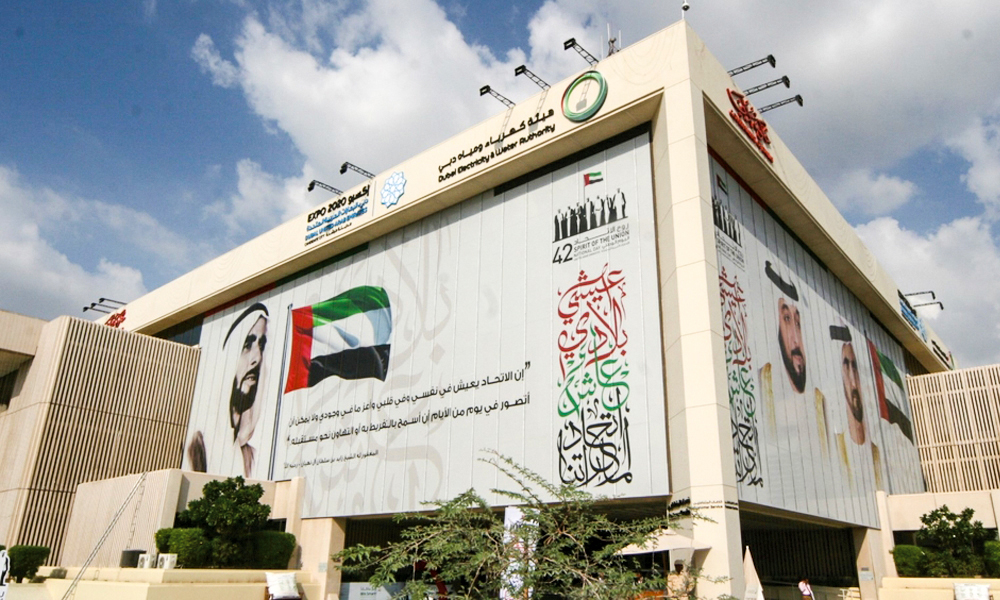
Dubai Electricity and Water Authority (DEWA) has announced its research and development centre has filed a new patent for a chemical liquid that supports energy storage systems and enhances their efficiency.

The novel liquid achieves high thermal and electrochemical stability. This achievement is an effective and safe solution for energy storage systems operations, notably lithium-ion batteries and fuel cells.

Saeed Mohammed Al Tayer, MD and CEO of DEWA, said this patent supports DEWA’s commitment to promoting energy security and sustainability as per the highest international standards, and its efforts to enhance Dubai’s position as a global hub for clean energy and a green economy.

“Our strategy is based on disrupting the role of utilities by digitalisation using the Fourth Industrial Revolution’s disruptive technologies. We harness innovation and the latest technologies to enhance DEWA’s excellence and leading position as one of the best utilities worldwide,” he explained.

He noted that DEWA has launched several initiatives and projects to diversify the energy mix and improve its storage, including the Mohammed bin Rashid Al Maktoum Solar Park, Hatta hydroelectric power plant, the Green Hydrogen project using solar power, and two pilot projects for energy storage using Tesla’s lithium-ion battery solution. There is also an important sodium-sulphur battery initiative, which is the first utility-scale energy storage pilot project in the region.

Meanwhile, Waleed bin Salman, Executive Vice President of Business Development and Excellence at DEWA, highlighted that the R&D Centre’s research areas include solar power, smart grid integration, energy efficiency, water, space technologies and again, an innovative mix of Fourth Industrial Revolution applications.

The post DEWA patents innovative energy storage liquid appeared first on Middle East Construction News.

Source: MEConstructionNews

Mammoet-Carbon-Monitoring-Platform1_1000x600.jpg

August 22, 2023 valueeng0

Global heavy lift and transport specialist Mammoet has launched a new zero emission option, which is designed to reduce the carbon impact of its equipment when working on large infrastructure projects such as bridges, wind turbines and power station components.

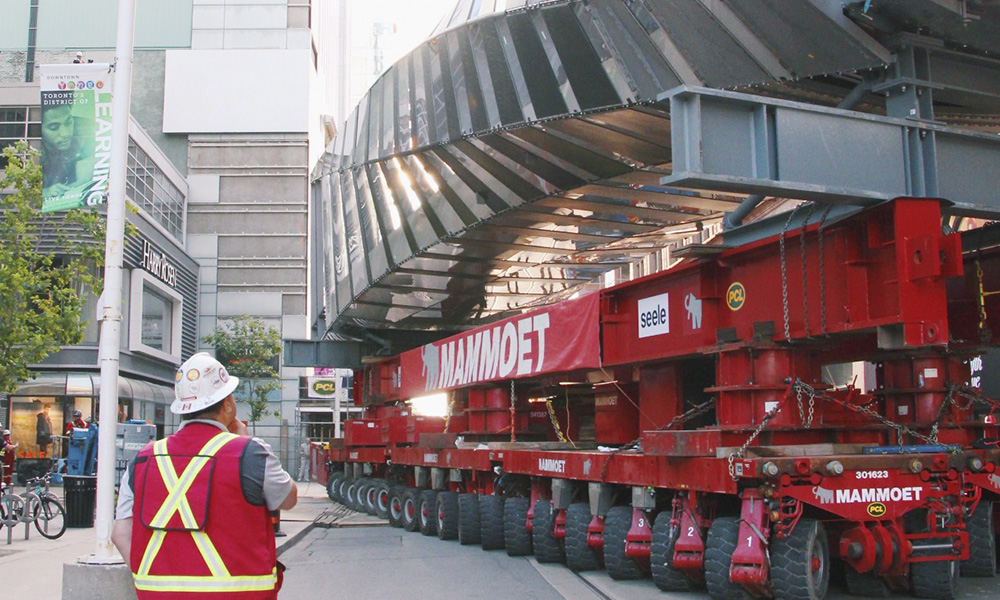
Mammoet said the new equipment works by converting existing Self-propelled Modular Transporters (SPMTs) from diesel to electric power. SPMTs are the workhorse of heavy industry, used in almost every large energy and construction project worldwide.

The new vehicle is part of Mammoet’s commitment to energy transition, and its move towards sustainability as a manufacturer. Fitting new engines in existing SPMT fleets cuts down on both waste and additional construction, compared to purchasing new ‘zero emission’ equipment.

The new SPMT can eliminate the carbon footprint otherwise incurred by site transports, allowing customers to reduce the impact of large infrastructure projects on surrounding people, businesses and infrastructure.

According to Mammoet, this solution was part-financed by the DKTI, a Dutch government programme to develop climate technologies and innovations in logistics. The company then worked with a leading provider of zero emission powertrains for heavy industry to bring the electric power pack solution to market.

Developed by Mammoet in 1984 and with over 40,000 axle lines in use globally, the SPMT revolutionised heavy industry by moving any heavy load safely, efficiently and with an emphasis on precision.

Mammoet said it has developed a retrofit kit to replace diesel engines in the vehicles with electric motors. Once converted, each SPMT works in the same way as before: transporting objects up to thousands of tonnes at walking pace, using a remote control.

The new motor also reduces noise levels at project sites, making working conditions quieter and safer. Communication between staff is clearer, while work can take place for longer periods at sites where sound restrictions are already in place.

The post Mammoet launches zero emissions option for SPMT transport appeared first on Middle East Construction News.

Source: MEConstructionNews