Yas-Beach2_1000x600.jpg

March 19, 2024 valueeng0

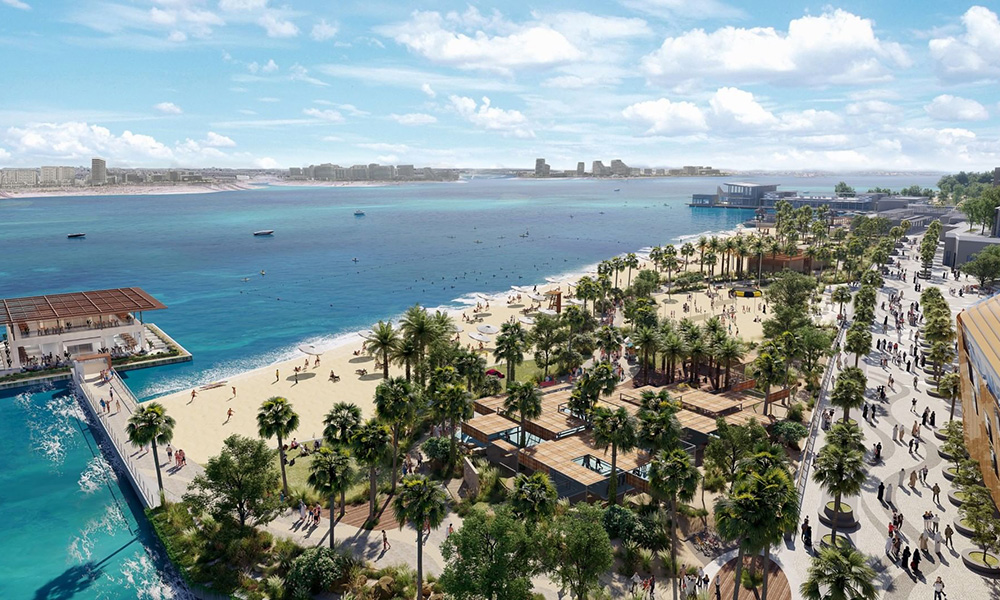
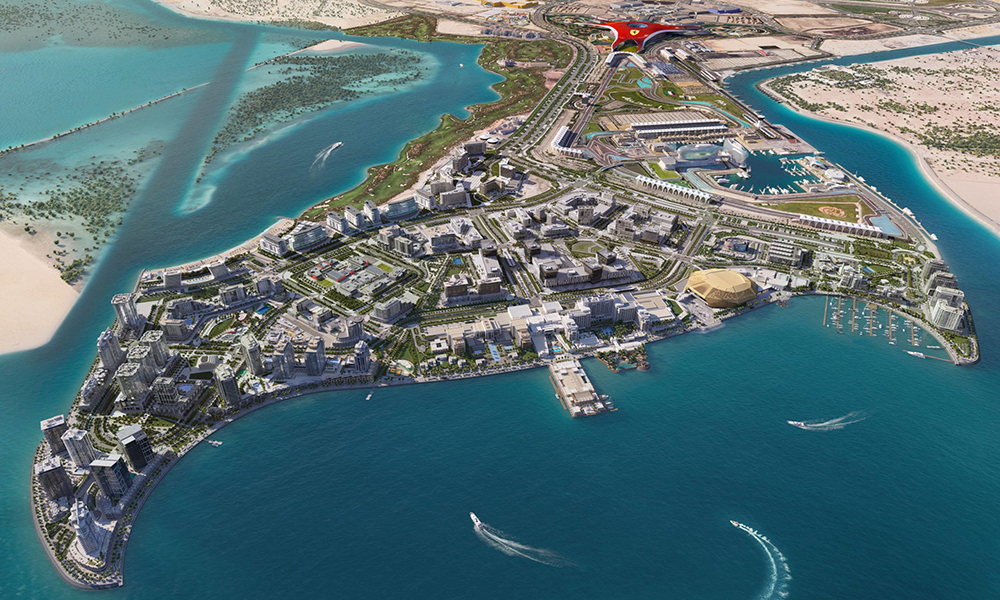
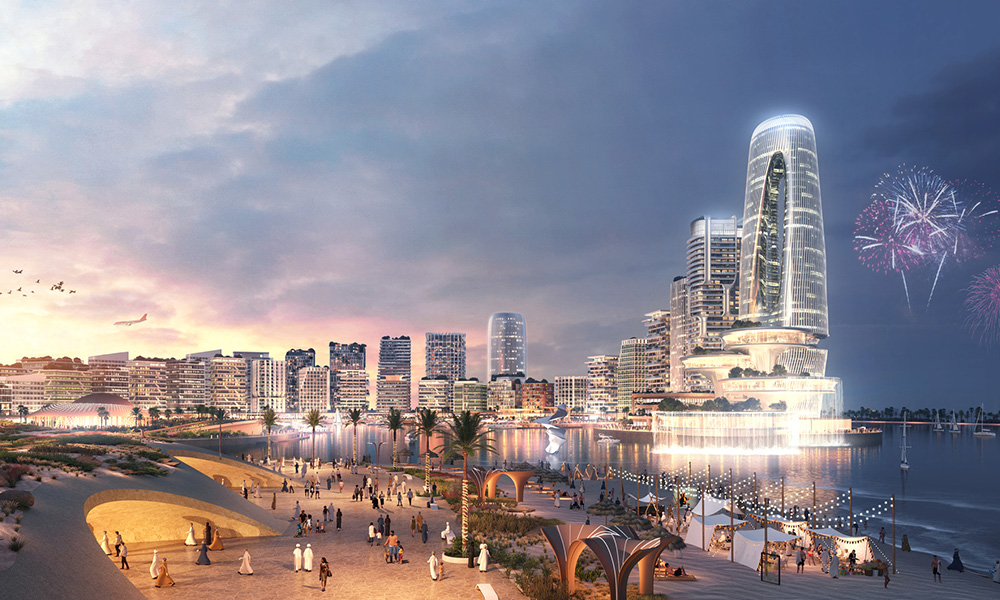
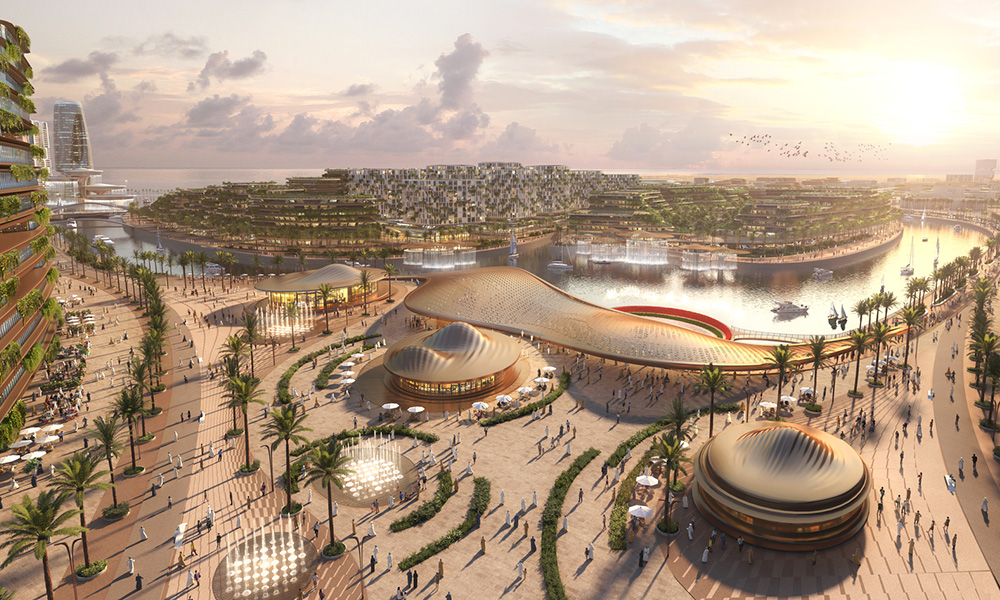
Miral has announced the development of two beaches at Yas Bay Waterfront, a day-to-night hospitality destination on Yas Island. Complementing the existing lifestyle and leisure offerings, the beaches will have a combined length 560m.

Located on the west side of the pier, the West Beach has been designed as a family destination and will feature beachside play areas for children, world-class dining outlets, food trucks, pedestrian walkways, as well as rest and recreation facilities.

East beach, located on the east side of the pier and just across the Etihad Arena, will feature outdoor fitness spaces and sports zones for beach football and volleyball. Open seating areas, coupled with a sunset lounge, will allow visitors to experience a variety of sports, entertainment, and music events.

Jonathan Brown, Chief Portfolio Officer said, “We are pleased to enhance our leisure and lifestyle offerings at Yas Bay Waterfront with the announcement of two beach developments. These upcoming experiences are an extension of our vision to enrich the diverse and unique experiences available to visitors on Yas Island, positioning it as a top global destination for leisure and entertainment while further contributing to Abu Dhabi’s wider tourism growth.”

Both developments will be located minutes away from Yas Island’s well-known raft of award-winning attractions and experiences, including SeaWorld Yas Island; Ferrari World Yas Island; Warner Bros. World Abu Dhabi; and Yas Waterworld Abu Dhabi.

The post New beaches announced for Yas Bay Waterfront appeared first on Middle East Construction News.

Source: MEConstructionNews


HET1_1000x600.jpg

March 19, 2024 valueeng0

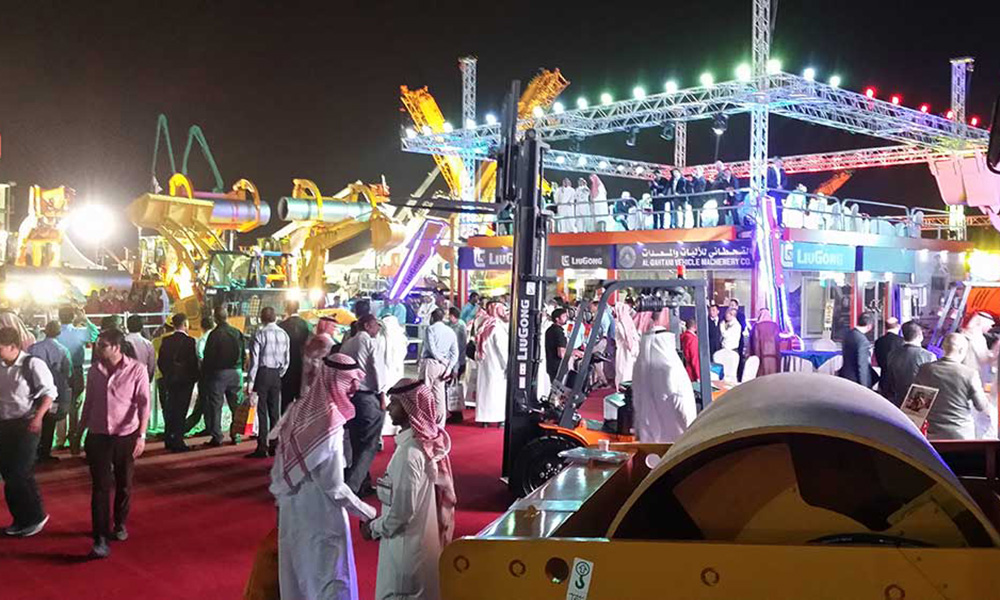
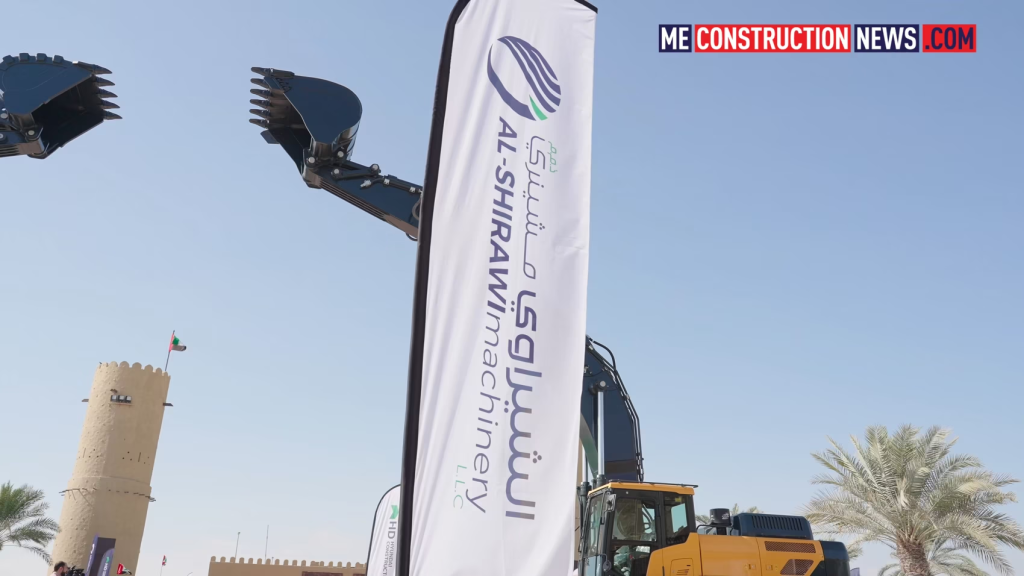
The Heavy Equipment and Truck (HEAT) Show, a premier event in the world of commercial vehicles and heavy machinery, is set to take place from 18-21 November 2024 at the Dhahran Expo in Dammam, Saudi Arabia.

The landmark exhibition, the largest of its kind in Saudi Arabia, is strategically positioned in the epicentre of the oil and gas industry and aims to showcase the latest in heavy equipment, trucks, and transportation solutions, reflecting the need for dynamic innovations at a time of unprecedented growth in the Kingdom.

Over four days, the HEAT Show will bring together manufacturers, distributors, industry experts, and key stakeholders from across the region and beyond to explore the latest trends, technologies, and advancements in heavy machinery and vehicles. The event is designed to encourage business opportunities, networking, and knowledge exchange, catering to the growing demands and challenges of the exciting Saudi Arabian market.

Exhibition Highlights:

Regional Participation: An international platform for attendees from various sectors, including construction, logistics, and energy, to source new technology and create strategic partnerships.

Local Support: Tailored to meet the unique needs of the construction and oil & gas sectors, showcasing specialised heavy equipment and vehicles.

Innovative Solutions: Discover cutting-edge technologies and solutions designed to enhance efficiency, safety, and sustainability in operations.

Live Demonstrations: Witness the power and capabilities of the latest heavy machinery and trucks through live demonstrations.

“The HEAT Show is more than just an exhibition; it’s a pivotal gathering where the paths of innovation, industry, and technology converge,” said Stephen White, Head of Content, Construction Machinery Middle East and Truck & Fleet Middle East. “Given the critical role of heavy machinery and transportation in the Saudi Arabian economy, this event promises to offer a wide variety of solutions that will drive efficiency, safety, and sustainability for operators across a huge number of sectors including construction, oil & gas, mining, logistics, transportation, and more.”

Dammam, the gateway to the Eastern Province of Saudi Arabia and a hub for the oil and gas industry, offers the perfect backdrop for the HEAT Show. The event underscores Saudi Arabia’s commitment to innovation and growth in alignment with Vision 2030, aiming to diversify the economy and promote sustainable development.

Read more about the event here.

The post Heavy Equipment and Truck Show to take place in Dammam 18-21 Nov 2024 appeared first on Middle East Construction News.

Source: MEConstructionNews


Jotun-Paints-Wall_1000x600.jpg

March 18, 2024 valueeng0

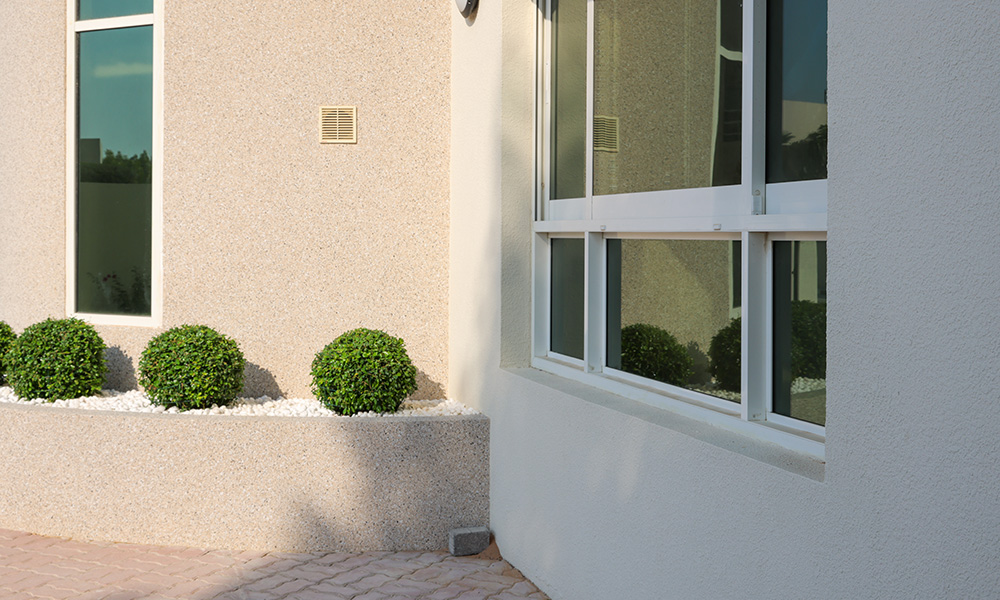
In the dynamic realm of the UAE’s construction industry, strategic decisions in property enhancement emerge as a top priority. Amidst various factors influencing construction value, paints often remain an underestimated element. Quality paint is an integral component in construction that transcends mere aesthetics to substantially contribute to property valuations.

Transforming Exterior Aesthetics into Construction Value

Having engaged in a plethora of projects with Jotun, it is understood that colour selection extends beyond personal preference and emerges as a strategic decision influencing the perceived value of a property. In a competitive market like the UAE where first impressions carry immense weight, the exterior paint of a structure not only enhances architectural features but also effectively communicates durability and modernity.

Properties with well-chosen exterior colours have shown a notable increase in perceived value, attracting a broader range of potential buyers and quickening the sales process. At times property developers can leverage the brand positioning built from the painting of one project to build on its success and construct additional properties that are painted in a similar style, thus creating its own brand identity and increasing its value from the paint design and matching colours.

Colour Psychology between Interior and Exterior Spaces

A vital consideration for designers in construction projects is the general ambiance of the structure crafted by the paint colours. Leading paint brands recognise that the strategic deployment of colour psychology establishes visually pleasing connections between interior and exterior spaces, ensuring a seamless transition that appeals to potential stakeholders. For example, the subtle influence of earthy tones or neutral hues contributes to an overall calming effect, making spaces more inviting and desirable. In this regard, homes with well-coordinated interior and exterior colour schemes can witness a reduction in the time spent on the market, due to increased demand and value.

Spaciousness through Colour

Creating a sense of spaciousness is integral to maximising construction value as buyers are generally more willing to pay more for larger spaces or the perspective of spaciousness. In this regard, paints advocating for white and light neutral tones prevent spaces from appearing cluttered and help areas look more open and airier. Paint colour choices like this can increase value through perspectives of spaciousness and provide future occupants the flexibility to personalise their rooms with a relatively adaptable paint colour. Such hues align with trends of property buyers seeking homes that exude a sense of freedom and openness.  Moreover, properties with strategically chosen colours that highlight spaciousness may have a faster sale rate compared to those that don’t.

Building Structural Resilience through Paint

In the UAE’s hot climate, durability is non-negotiable in the construction equation. Innovative paint solutions from credible brands offer a range of external coats designed to withstand the region’s harsh conditions. Light colours such as white, beige, or grey provide a contemporary aesthetic and contribute to reducing heat absorption, enhancing the longevity of structures.

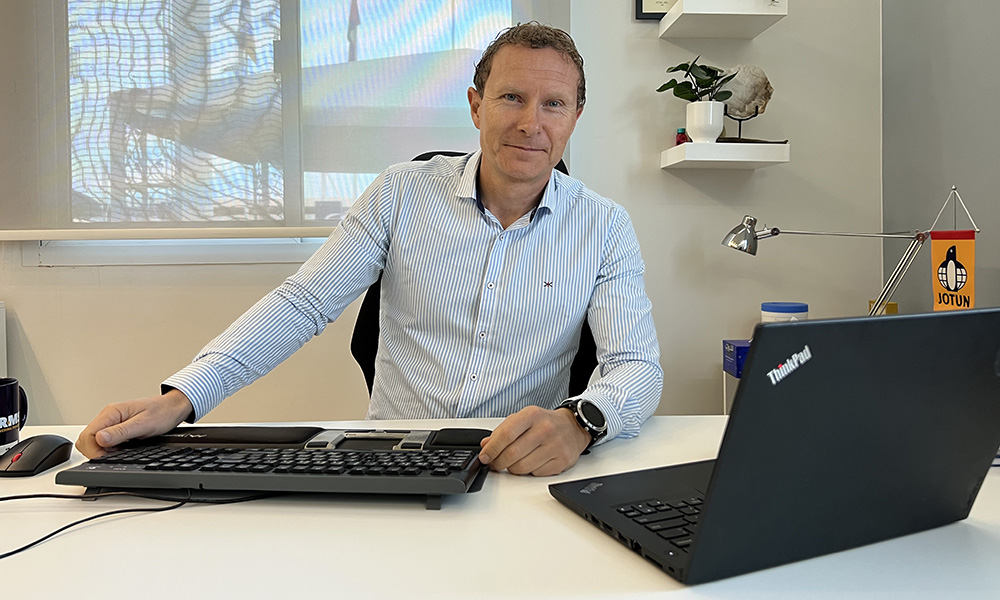
Svein Johan Stub, General Manager, Jotun Paints Abu Dhabi.

Textured paints with features like crack bridging further exemplify the commitment to longevity and low maintenance, thereby helping construction build value through improved durability from specialised paints. It can also often happen that one does not associate beauty with protection, where homeowners or property buyers might assume that one is exclusive to the other.  Hence, developers must choose paints that can do both to add to the property value by relieving homeowners’ concerns of aesthetics along with durability.

Navigating Local Regulations

Navigating local regulations is an essential aspect of any construction project in the UAE. By aligning with local guidelines and paint colour codes, properties become less prone to maintenance from mediocre compliance and present ready opportunities for potential buyers to purchase. This foresight alleviates concerns of additional paint jobs thereby positioning painted structures as hassle-free investments. Compliance with local regulations can reduce the likelihood of negotiations related to exterior appearance, contributing to a smoother sales process ultimately increasing the value of the property.

Meeting Certification Standards

Innovative paints can also help achieve building certifications that improve the overall positioning and construction value. For example, using certified paints that exceed benchmark standards can not only meet proven performance criteria and increase the building’s reputation as an innovative structure, but also contribute towards meeting green building standards – which if achieved, can increase the property’s value due to increased energy efficiency and durability.

In conclusion, as the UAE’s construction industry continues to evolve, innovative paint solutions stand as pivotal players in elevating construction value. Through strategic colour choices, durability considerations, and compliance with local regulations, paint contributes to the long-term viability and attractiveness of properties in the competitive marketplace. For B2B and B2C stakeholders, embracing innovative paint solutions ensures that construction projects not only meet industry standards but exceed expectations, setting new benchmarks for excellence and added value in the vibrant construction landscape of the UAE.

The post The impact of paint appeared first on Middle East Construction News.

Source: MEConstructionNews


Madrid-Airport1_1000x600.jpg

March 18, 2024 valueeng0

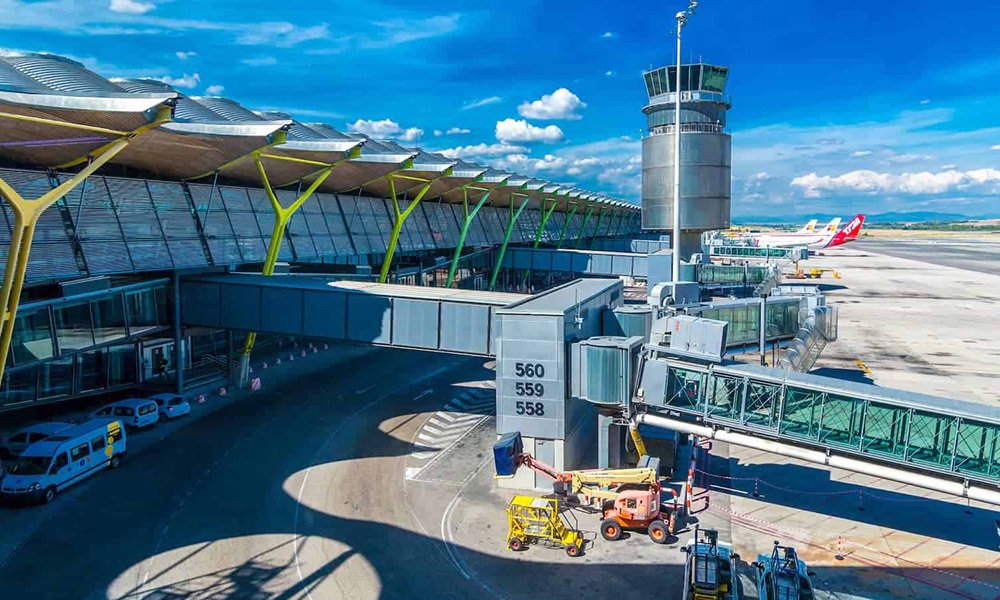
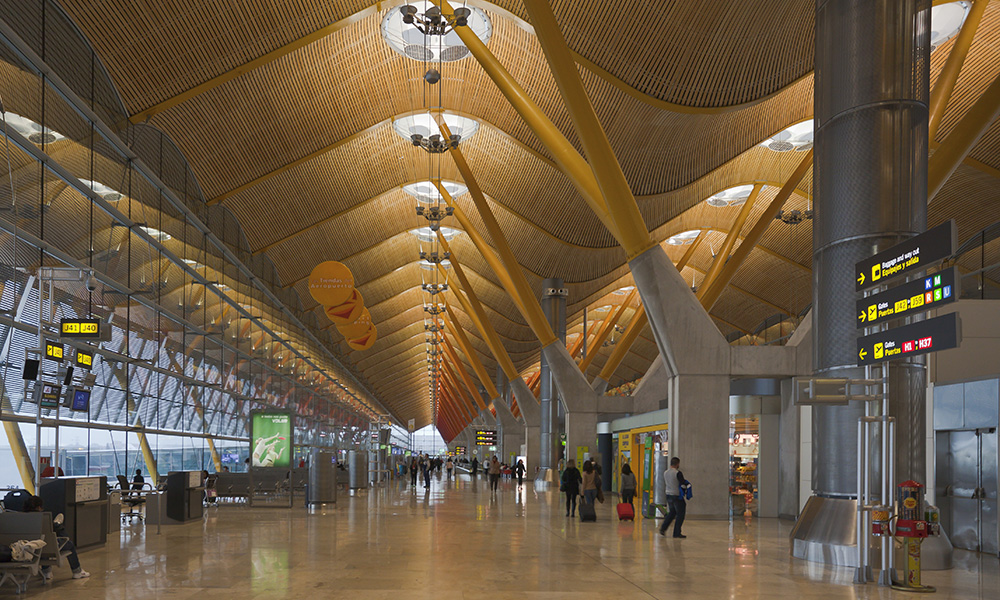
Madrid’s international airport, Adolfo Suárez-Madrid Barajas Airport, is to undergo an expansion, with the goal of enhancing its role as Europe’s primary gateway to Latin America. Operations at the expanded airport – Spain’s busiest – are also expected to bolster the country’s connection to Asia.

Announcing the investment initiative for the airport, potentially totalling US $2.6bn, Spain’s Prime Minister, Pedro Sánchez said, “This will be the airport with the greatest growth potential in Europe.”

The sum is said to represent the largest infusion of funds into Spanish airport infrastructure in the past decade.

Sánchez also said that the expansion initiative is expected to generate thousands of direct and indirect job opportunities, while further bolstering Madrid’s gross domestic product (GDP).

The airport’s operator, AENA, says no new terminals are planned; instead the project will focus on refurbishing and expanding the existing facilities.

Scheduled to begin operations in 2031, the project aims to expand the airport’s capacity to 90m passengers per year.

The post Madrid’s airport to undergo $2.6bn expansion appeared first on Middle East Construction News.

Source: MEConstructionNews


AlKhuwairWaterfront1_1000x600.jpg

March 18, 2024 valueeng0

Oman’s Ministry of Housing and Urban Planning (MoHUP) has announced plans for a concept-led waterfront project, Al Khuwair Muscat Downtown and Waterfront Development, to be built in the capital at a total investment of US $1.3bn. Spanning 3.3m sqm, the project has been designed by Zaha Hadid Architects (ZHA).

The sustainability-led design is said to prioritise the well-being of residents and visitors, and will redefine urban living in Oman at a time when Muscat’s population is anticipated to almost double from 1.5m to 2.7m inhabitants by 2040.

The city is also increasingly popular with international visitors, welcoming over three million tourists last year. Responding to this rapid growth, ZHA’s design will transform this existing administrative and industrial area of Muscat into a vibrant new urban district with an expected population of 64,500, said a statement.

The district will comprise five key areas – a marina, a recreational waterfront lined with beaches and sports facilities, a canal walkway, a cultural quarter and a Ministry campus. Continuing Muscat’s rich tradition as a historic port city, the Al Khuwair development is informed by local culture, with the marina acting as the cornerstone of the project, catering to residents, visitors, and tourists.

It will feature a range of attractions while emphasising green spaces and community activity areas along the waterfront, including destination dining experiences, luxury retail outlets, health and wellness facilities, hotels, and residential spaces, said the statement.

ZHA has worked with Buro Happold to implement a materials strategy that factors in the impact of an extreme coastal climate, including mitigating any ‘urban heat island’ effects, stormwater management and breakwaters. The project prioritises material re-use, including recycled construction materials and responsible procurement, and buildings within the Ministry campus will be retrofitted and reused through a programme of refurbishments.

Throughout the compact and walkable development, the use of public transport is encouraged, with good connections to transit services underpinning smart mobility, including light rail transit, bus rapid transit and water taxis. Pedestrian activity is also helped by passive shading, and a cycle infrastructure helps improve on carbon savings by cutting back on private vehicle use, the statement outlined.

Dr. Khalfan Al Shueili, Minister of Housing and Urban Planning remarked, “This visionary project will bring us another step closer to realising the Oman Vision 2040 and delivering a sustainable and prosperous future for the people of Oman. It will help shape the future of both Muscat and Oman more broadly, creating a new destination to welcome visitors from across the globe to our capital city. We trust this project will serve as an exemplar of our ambition to improve human and environmental well-being and our commitment to collaborate with leading international partners during this period of unparalleled development and growth for our nation.”

The post Oman’s MoHUP announces new $1.3bn waterfront project appeared first on Middle East Construction News.

Source: MEConstructionNews


Piling_1000x600.jpg

March 18, 2024 valueeng0

Construction firms in the Sub-Saharan Africa and Middle East and North Africa (MENA) region are expecting a ‘busy and profitable 2024’. The majority of players in the segment are anticipating ‘an increase in revenue and projects’ according to the results of a survey conducted by RIB Software in November 2023.

The survey comprises 292 responses from industry players, with 75% in Sub-Saharan Africa and 25% in Middle East and North Africa. The majority of responses were gleaned from building (31%), civil (27%) and general contracting (17%) operations. The majority of companies (87%) said they had recovered from the COVID-19 pandemic, citing rising input costs (51%), margin pressures (39%) and attracting and retaining qualified individuals (30%) as their three greatest challenges over the past 12 months.

RIB Vice President MEA, Peter Damhuis noted that rising input costs can largely be attributed to supply chain disruptions following the pandemic and exacerbated by the turmoil in Ukraine and Gaza. “This has led to an increase in prices of key construction materials such as cement, diesel, and asphalt, affecting initial budgets and resulting in even thinner margins for the industry,” he outlined.

Going forward, construction companies expect an increased order book pipeline (45%), increased private sector work (43%), sustainability (39%), worker productivity enhancements (37%) and government-led infrastructure spend (29%). Projections for 2024 in terms of revenue and project pipeline are cautiously optimistic. Some 39% of respondents expect to increase their revenue by between 5% and 10%, while 27% expect increased revenue of 15% or more, RIB said in a statement.

In terms of project pipeline projections for 2024, 29% of respondents expect an increase of 15% or more, another 29% expect an increase of between 5% and 10% and 24% expect an increase of between 10% and 15%, it added.

Economist Dr Roelof Botha, a compiler of the Afrimat Construction Index (ACI), is said to echo the sentiments shared by RIB Software, driven by the focus on renewable energy, the need to overcome logistical challenges, government spending on various projects ahead of the election, and sustained growth in new capital formation as key drivers for the sector in South Africa.

The rising price and demand for oil could see some Middle East countries benefit from future oil and gas construction projects, with construction expected to increase steadily in Qatar, UAE/Dubai, Bahrain and Kuwait in the year ahead and beyond.

In 2024, 53% of industry players will focus on digital transformation as a key strategic initiative, while 50% intend to implement LEAN construction principles, 44% will look at expanding their business offerings and 38% intend to expand their geographical reach, RIB Software explained.

Given his firm’s specialisation in digital transformation, Damhuis noted that RIB welcomes the focus on digital transformation. He remarked, “The construction industry is notorious for being somewhat behind the curve when it comes to digital transformation. A well-thought-out digital transformation strategy can help construction companies improve their margins and ensure they meet budget and time deadlines.”

When choosing construction software, respondents will be prioritising functionality (31%), ease of use (32%) and cost (13%) in 2024. 52% of respondents said their companies will spend more on IT in 2024 than they did in 2023 and 30% said their spend will be the same as 2023. The technologies they intend to focus on in the year ahead will be on estimating and planning software (37%), cloud and real-time collaboration (26%) and project management software (10%), RIB outlined.

When asked whether they would be exploring ISO19650 standards and compliance to the standard ISO, 38% of respondents affirmed they would be. In addition, 52% of respondents said they expected the number of projects involving Building Information Modelling (BIM) to increase. In response to questions about the greatest risk factors relating to their businesses in the year ahead, 76% of respondents cited rising costs due to global unrest as the greatest risk factor, followed by fuel prices (51%) and construction mafia (50%).

Only 0.02% of respondents in the MENA region said the construction mafia represented a risk, while 48% of respondents in the SSA region cited it as a significant risk to their operations. In addition, 42% of respondents said they have carbon reduction strategies in place, with 41% saying that progress in the carbon reduction space remained the same as in the previous year and 26% saying more progress was made over the past 12 months.

Concluding, Damhuis pointed out that the overall industry outlook is positive for 2024. “This is encouraging, especially for Sub-Saharan Africa where the industry has been faced with significant challenges such as the construction mafia, rising costs, a dearth of talent and projects not coming to fruition quickly enough.”

The post RIB Software survey reveals positive outlook for 2024 appeared first on Middle East Construction News.

Source: MEConstructionNews


Infrastructure_1000x600.jpg

March 14, 2024 valueeng0

Dubai’s Roads and Transport Authority (RTA) has completed construction works on the internal roads at Margham, Lehbab, Al Lesaili, and Hatta regions, spanning a total of 35km.

This comes close on the heels of RTA’s recent completion of the construction of internal roads at three residential districts – Al Quoz 2, Nad Al Sheba 2 and Al Barsha South 3 – extending 37km across the three districts.

In addition, RTA has already started further road works at both Lehbab and Al Lesaili, designed to significantly improve traffic flow-through and enhance local residents’ access.

The Margham project covers roads extending 5km along Dubai-Al Ain Road, near Skydive Dubai. The work includes road pavements, rainwater drainage networks and streetlights. The project will serve more than 1,100 local residents.

Meanwhile, the Lehbab project scope includes paving roads extending 4km, as well as infrastructure work for rainwater drainage and streetlights. The project will directly serve more than 3,000 residents.

The Al Lesaili project will cover street lighting works for the existing roads at Saih Assalam near the Last Exit, and Al Qudra Lakes, extening over 7 km. The project, which serves about 2,900 residents, will focus on improving the entry/exit points of the area.

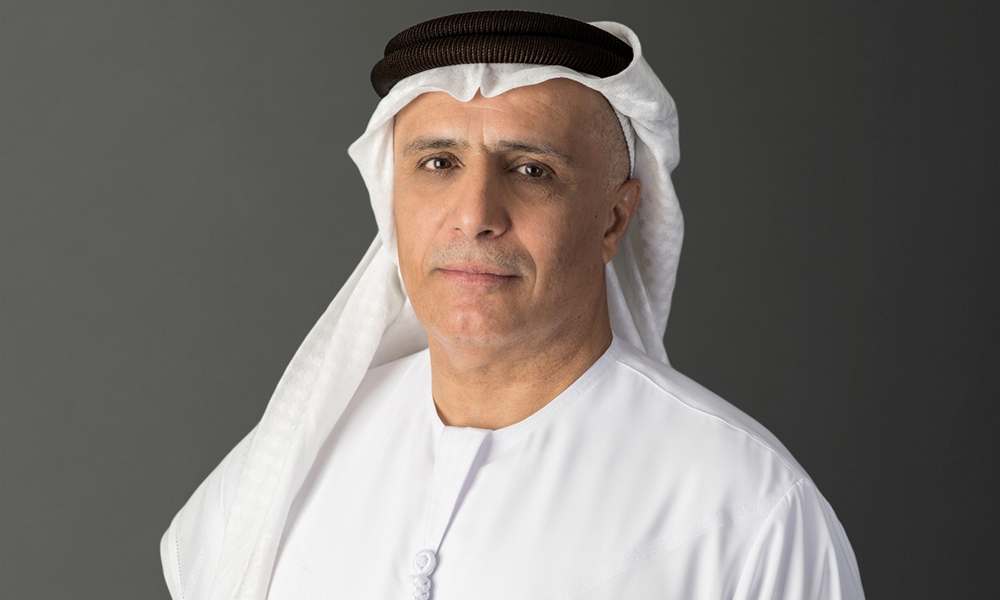
Announcing the project completion, Mattar Al Tayer, Director-General, Chairman of the Board of Executive Directors, RTA said, “The project reflects RTA’s commitment to upgrading the infrastructure of roads, streetlights, and rainwater drainage systems in residential communities. The project covers the construction of roads extending 2km at Suhaila in Hatta in addition to infrastructure works that include rainwater drainage and streetlights. It serves about 6,000 residents and improves the entry/exit points as well as the connection of the newly developed residential community with the road network.”

The post New infrastructure work for four areas of Dubai complete says RTA appeared first on Middle East Construction News.

Source: MEConstructionNews


DC-AWARDS-1000X600.jpg

March 14, 2024 valueeng0

The Big Project Middle East (BPME) editorial team has announced that the second edition of the ME Digital Construction Awards (ME DCA) will take place on 29 May at the Habtoor Grand Resort, JBR, Dubai. The inaugural event took place in 2023 and recognised 12 winners from across the region.

Nominations are now open and the editorial team has stated that the company categories are open to: government organisations, developers, consultants, contractors, integrators/specialists and suppliers.

The 2024 edition has been expanded to 15 categories and invites individuals and organisations to nominate across the following categories: Young Technology Champion of the Year; Digital Visionary of the Year; Digital Team of the Year; Construction Software Provider of the Year; Construction Hardware Provider of the Year; Digital Contractor of the Year; Digital Consultant of the Year; Technology SME of the Year; Digital Government Organisation of the Year; Data Champion of the Year; Digital Construction Innovator of the Year; Net-Zero Technology Champion of the Year; Excellence in Collaboration & Productivity; Digital Construction Project of the Year – Building, and Digital Construction Project of the Year – Infrastructure. Nominations will close on 26 April, click here to read the nomination guidelines.

Once nominations close, they will go through a two-step judging process; the first will be conducted by the magazine’s editorial team, following which a panel of industries judges will deliberate and vote on the final nominations. Winners will be unveiled at a gala dinner event at the Habtoor Grand Resort, JBR, Dubai on 29 May. Read about all the categories here.

Read more about the ME Digital Construction Awards here.

The post ME Digital Construction Awards to take place on 29 May appeared first on Middle East Construction News.

Source: MEConstructionNews


Industrialised-Construction1_1000x600.jpg

March 14, 2024 valueeng0

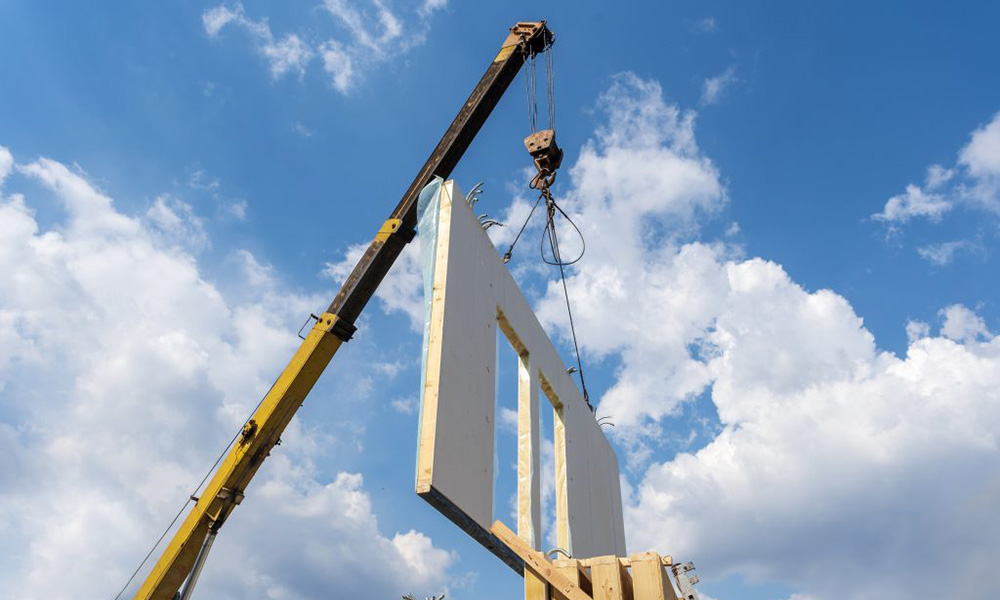
The rumble of bulldozers and the clang of hammers may soon be replaced by the whir of assembly lines. The construction industry is undergoing a radical transformation, shifting from a project-by-project approach to a product-based one. This means prefabricated components and readily customisable designs, promising faster completion times, improved performance, and a more sustainable future for construction.

But for many companies, the road to this future is blocked by outdated and fragmented design processes. These roadblocks prevent them from capitalising on the construction revolution that’s already underway.

Enter Building Information Modeling (BIM), the key to unlocking this new era. BIM creates a single, intelligent digital model of a building, accessible to everyone involved, from the architects dreaming up the design to the engineers making it a reality, and even the contractors and facility managers who will see it through to completion. It’s like having a blueprint on steroids, fostering collaboration, and streamlining communication across the entire project.

Siemens Integrated Design and Configuration is the bridge connecting the traditional world of construction to the modular future. This comprehensive suite of tools empowers organisations to navigate the digital landscape and embrace the modular revolution.

This innovative approach uses multi-discipline design and re-use, advanced design automation, and systems-driven design to enable faster, cheaper, and problem-free innovation.

By embracing industrialised construction and leveraging the power of fully integrated design and configuration, companies can secure their place in the rapidly evolving construction landscape. It’s time to ditch the outdated methods and step into the future of building.

Embrace the future with multi-discipline design and reuse

Imagine designing buildings and factories faster, cheaper, and better.

This is the future Siemens Integrated Design and Configuration promises. By ditching the “reinvent the wheel” approach, it allows engineering teams to collaborate seamlessly across disciplines, using their preferred software. This means faster project completion and significant cost savings.

The traditional project-based approach is like building a new house every time you need one. With Siemens’ solution, you’d have pre-designed, reusable modules, like walls, roofs, and plumbing systems, that can be easily customized and assembled, saving time and money.

This “product-based” approach is not just about efficiency, it’s about empowering your team to innovate. They can focus on creating extraordinary designs, confident in the knowledge that their work can be easily applied to future projects.

With features like drag-and-drop components, reusable designs, and integrated Bill of Materials management, Siemens Integrated Design and Configuration helps you design faster, collaborate better, optimise designs, and reduce costs.

At Ansaldo Energia, Italy’s major provider of power plants, multi-discipline design and re-use is saving time and money. AEN estimates since incorporating Siemens solutions it has increased component re-use by 20 to 40% and consolidated corporate know-how in about 80 design practices.

From chaos to confidence: Automate custom designs and meet every client need

Creating custom designs for your clients with the same speed and precision as you would with off-the-shelf products is the power of automated design for engineer-to-order (ETO) solutions.

Traditionally, custom projects meant slow turnaround times, high costs, and frustrated clients. But what if you could transform customer needs into precise designs in a matter of minutes, not months?

This is where Siemens Integrated Design and Configuration comes in. It empowers your engineering teams to automate repetitive tasks and leverage pre-designed components, allowing them to respond to custom requests quickly while reducing errors and ensuring quality consistency.

This solution is like having a pre-built toolbox of design elements, ready to be assembled and customised to meet your client’s exact specifications. No more starting from scratch, just efficient customisation that saves you time and money.

The process is simple: when the custom requirements are submitted pre-designed components in the design library are leveraged to build the design. With every piece in places the software automatically generates the design and a detailed and accurate proposal that includes 3D models and bills of materials.

Taming the chaos of large capital project design with systems-driven design

Designing large-scale capital projects like power plants is complex and prone to errors. These mistakes can lead to massive cost overruns, project delays, and non-compliance with regulations.

A recent study found that the average project suffers from a $1.2bn cost overrun, which is almost 80% of the initial budget. Additionally, these projects can be delayed by six months to two years. The traditional approach to design, where different teams work in isolation, is a major culprit. This often leads to hidden issues that only surface later in the construction phase, causing rework and further delays.

There’s a better way. Systems-driven design tackles these challenges head-on by clear requirement capture, connecting requirements to design, and enabling continuous integration. The result? Streamlined communicated, reduced errors, and cost savings throughout the project lifecycle.

Siemens Energy exemplifies the benefits of this approach. By using NX, Teamcenter, and Simcenter, they achieved achieve machine tool overall equipment efficiency (OEE) from 65 to 85%; reduce part machining time by 25 to 36% and achieve nearly 26% in computer-aided everything (CAx) cost reduction.

By embracing BIM and Siemens Integrated Design and Configuration, companies can unlock the potential of the industrialised approach and build a more efficient, sustainable, and profitable future.

Whether it’s energy production, construction, or the mining industry, learn more about how this approach positions companies to outpace the competition and secure their place in the rapidly evolving next-generation landscape.

The post Build the future of construction with next-gen design solutions appeared first on Middle East Construction News.

Source: MEConstructionNews