RTA-Falcon-Project1_1000x600.jpg

December 6, 2023 valueeng0

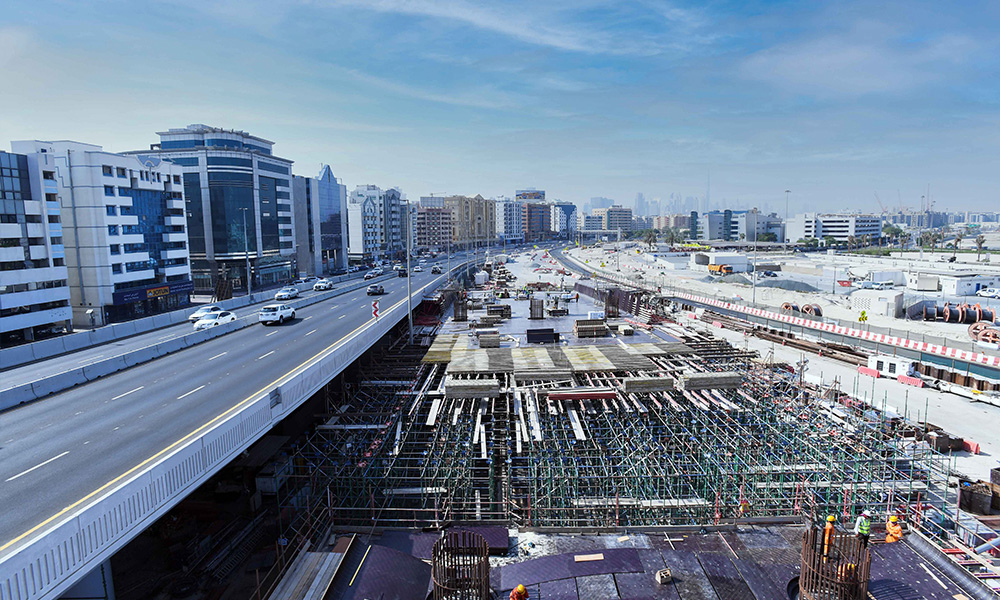
Dubai’s Roads and Transport Authority (RTA) has given the go-ahead for 10 Public-Private Partnership (PPP) portfolio projects for the 2024-26 period, with an estimated value of US $681mn.

The move is in line with Dubai Government’s strategy to foster public-private partnerships aimed to boost the emirate’s economic growth, by expanding the role of the private sector in the development of infrastructure and the delivery of services.

The projects listed in the Dubai Portfolio for PPPs include the ‘Union 71’ project, a comprehensive residential and commercial complex adjacent to the Union Station of the Dubai Metro, a key interchange station between the Red and Green Lines. The urban transit-oriented development project integrates commercial and residential units and retail outlets with the underground metro station, said the RTA in its statement.

With its proximity and accessibility to the metro, public buses, and marine transport stations, the project will serve and ease the mobility of mass transport riders from all spectrums of the community.

The portfolio also comprises a multi-level parking terminal in Port Saeed & Al Karama, Deira Plaza; smart street lighting; aerial taxi and smart platforms for transport and rental vehicles – as well as housing quarters for drivers in Al Khawaneej, Al Ruwayah, Al Awir, and Jebel Ali.

The list also includes upgrading of the commercial development at Al Karama Bus Station and a ‘sky garden’ suspended bridge over Dubai Creek.

Mattar Al Tayer, Director General, Chairman of the Board of Executive Directors, RTA, said the endorsement of the PPP portfolio stems from RTA’s commitment to enhancing partnership with the private sector and adopting top international practices. He explained that it seeks to map out a comprehensive framework to support public-private partnerships, improve the regulatory environment for long-term collaborations, introduce innovative solutions, and create new opportunities in the mobility and finance fields.

Al Tayer pointed out that RTA had a track record of pioneering experiences in constructing various infrastructure projects in the fields of roads and transport. “Notable among these is the project to establish three comprehensive rest stops for trucks, along with 16 laybys for trucks strategically located across the emirate. The project is the first of its kind in the region,” he concluded.

The post RTA commits to 10 PPP agreements appeared first on Middle East Construction News.

Source: MEConstructionNews

Solar-PV_1000x600-ACWA.jpg

December 6, 2023 valueeng0

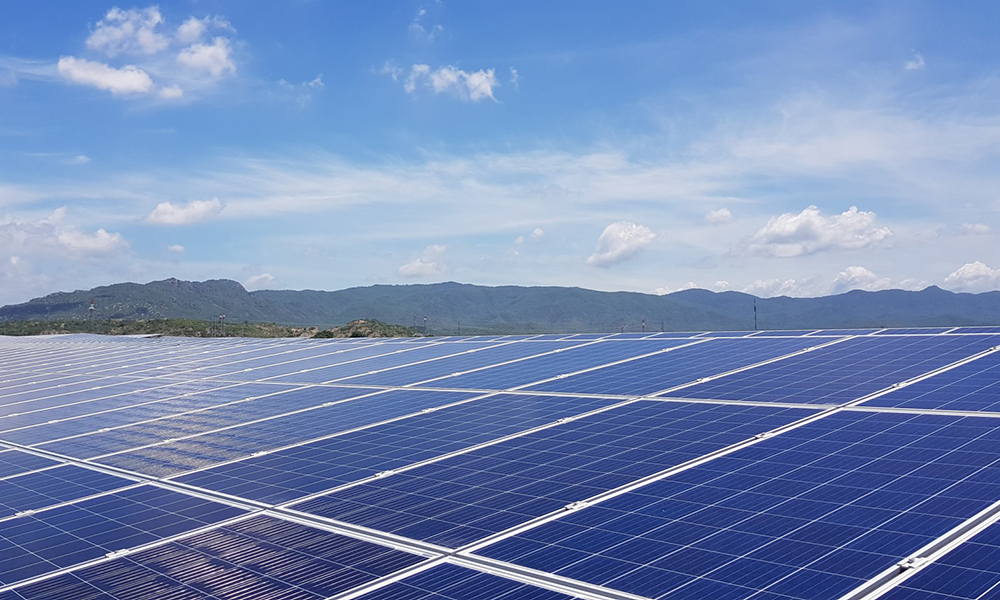
The development of a solar photovoltaic power plant with a targeted aggregate capacity of up to 1,000MW is set to take shape in Malaysia, following the signing of a deal between Malakoff Corporation and Abu Dhabi Future Energy Company (Masdar). The deal also outlined the research and development of other renewable energy projects in the region.

The agreement was signed by Malakoff’s Managing Director and Group CEO Encik Anwar Syahrin Abdul Ajib and Masdar’s CEO Mohamed Jameel Al Ramahi at COP28.

The agreement stipulates that both parties will jointly conduct technical and commercial assessments and/or pre-feasibility studies on specific projects that have been identified. The firms will also collaboratively handle the comprehensive tasks and activities involved in the project’s development, implementation and management, including the structuring of financing funds.

In pursuit of a strategic two-phase implementation, the collaboration aims to significantly enhance Malakoff’s renewable energy portfolio, which is said to align with their unwavering commitment to sustainability and strategically leveraging expertise from both parties for mutual growth and success, said a report.

On the strategic collaboration, Abdul Ajib said it is timely when looking at the critical need for sustainable energy solutions amidst climate challenges. He stated, “This collaboration stands as a testament to Malakoff’s robust expansion in renewable energy aligning not only with the global call to action but also resonating with Malaysia’s ambitious objective of achieving Net Zero status by 2050.”

The move is also said to underscore Malakoff’s corporate commitment to making meaningful contributions toward addressing the urgent global imperative for sustainability.

Masdar said it had also recently signed a MoU with Malaysian Investment Development Authority (MIDA), for the development of 10,000MW worth of projects in Malaysia at an investment of $8bn.

Al Ramahi said, “We are very proud to be strengthening our support for Malaysia’s renewable energy ambitions with this partnership. As a clean energy pioneer with over 17 years of experience in deploying renewable and clean energy projects at scale, we look forward to helping build Malaysia’s renewable energy capacity with this agreement in support of its Net-Zero targets.”

To date, Malakoff holds a total of 151MW of renewable energy generating capacity under its portfolio consisting of projects acquired for large scale solar, rooftop solar and small hydro power generation, the report concluded.

The post Malakoff and Masdar ink deal to develop solar PV project in Malaysia appeared first on Middle East Construction News.

Source: MEConstructionNews


Aqua-Properties1_1000x600.jpg

December 6, 2023 valueeng0

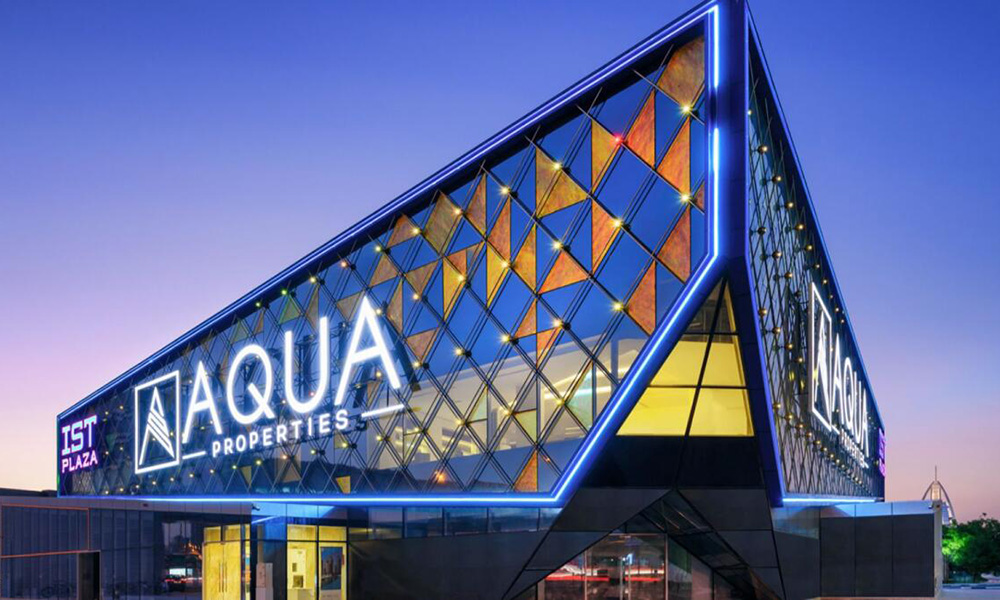
UAE-based Aqua Properties has announced plans to launch two major projects – worth US $817mn – in Dubai within the next six months.

Among the upcoming projects is a 50-storey luxury tower on Sheikh Zayed Road and the development of an extensive 300,000sqft plot, the largest land parcel within the Arjan neighbourhood.

Aqua has already completed four residential and commercial projects in the UAE and three more are currently under way.

Aqua Properties’ Founder, Ali Tumbi, commented, “Currently overseeing three ongoing projects with two more in the pipeline, including upscale apartments and strategically located mixed-use developments, Aqua Properties stands at the forefront of innovative real estate solutions. The noteworthy completed projects include J5, J8, O Ten, and Mysk, contributing to positive client responses, high occupancy rates in completed projects, and robust investor interest in ongoing developments.”

Aqua Properties has now set an ambitious goal to deliver over 500 residential and commercial units in the first quarter of 2024.

The post Aqua Properties announces major plans for 2024 appeared first on Middle East Construction News.

Source: MEConstructionNews


Oman-Cultural-Complex1_1000x600.jpg

December 5, 2023 valueeng0

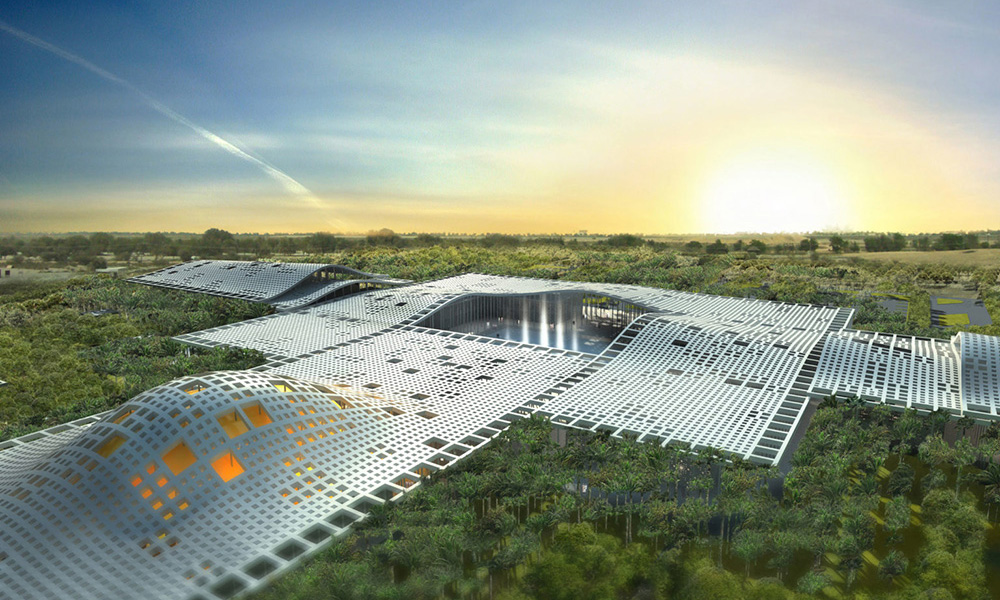
A US $383mn contract has been awarded for the development of the Oman Cultural Complex. The project is expected to be spread over an area of 400,000sqm in Muscat. The project, which is being set up in the Madinat Al Irfan district, will be completed within a three-year period.

According to a report, Sayyid Theyazin bin Haitham Al Said, Minister of Culture, Sports and Youth, signed the agreement with a consortium of two companies for the project.

The Oman Cultural Complex is said to be a modern landmark and an edifice featuring the country’s civilisation, culture, scholarly accomplishments, and institutional entity.

The new cultural district brings together three major buildings around a wide, central square – the Oman National Theatre, which boasts a 1,000-seat auditorium and a 250-seat flexible auditorium; the 20,000sqm five-storey National Library and the National Archives partially open to the public, including nearly 20km of archival shelf-displays.

The complex also features an exhibition centre, a cultural centre and a cinema, the report concluded.

The post Oman Cultural Complex to be developed at cost of US $383mn appeared first on Middle East Construction News.

Source: MEConstructionNews


JLL_KSA_Image_2.jpg

December 5, 2023 valueeng0

Saudi officials have announced plans to spend US $92bn to transform Riyadh ahead of Expo 2030. The investment aims to make Riyadh one of the most sustainable cities through initiatives, including the King Salman Park Initiative and Saudi Green Initiative (SGI), as well decarbonisation of the urban transport – within the next seven years.

Princess Haifa bint Mohammed Al Saud, the Vice Minister of Tourism, was speaking during the third edition of the Saudi Green Initiative (SGI) Forum, which opened on the sidelines of COP28. Senior Saudi officials took to the stage to discuss the Kingdom’s sustainable urbanisation progress.

“One of those ways is to have more green spaces, and it’s the King Salman Park Initiative that we are going to develop in the middle of the city to enhance and create that,” she explained.

Under SGI, more than 43m trees and shrubs have been planted across the Kingdom since it was set up in 2021, with 94,000ha of degraded land (equivalent to 146,000 football fields) being rehabilitated across the country.

In his address, Saleh Al Jasser, Minister of Transportation, Saudi Arabia, highlighted some of the actions being undertaken across the Kingdom to decarbonise urban transport.

“We are implementing remote work in government agencies, which helps reduce demand for daily travel. To shift to less carbon intensive modes of transport, we have set ambitious targets to increase the share of public transport, with the Riyadh bus and metro projects well underway,” Al Jasser concluded.

The post Saudi Arabia to invest US $92bn into transforming Riyadh ahead of Expo 2030 appeared first on Middle East Construction News.

Source: MEConstructionNews

ZWSoft-Big-5_1000x600.jpg

December 3, 2023 valueeng0

Big 5 Global: Unite the Global Construction Community

Big 5 Global, known as the largest and most influential event for the construction industry, has been at the forefront of bringing together real estate developers, architects, contractors, engineers, consultants, manufacturers, and distributors from around the world, since its inception in 1979.

This year marks the 44th edition of the event, set to welcome over 100,000 participants from 150+ countries. With access to cutting-edge built environment solutions, premium strategic content, technical workshops, and prestigious awards, the event has become a pivotal platform for networking, knowledge exchange, and forging long-lasting business relationships.

Discover How ZWCAD Empowers the Construction Industry

ZWSOFT is proud to be a part of Big 5 Global, where our team will showcase its latest innovative CAx solutions to industry professionals and enthusiasts alike.

At ZWSOFT’s booth, visitors can immerse themselves in a series of informative mini-seminars designed to delve into critical topics and streamline the contractors’ and designers‘ workflows, including ‘ZWCAD, A Highly Compatible and Efficient 2D CAD Software’,”Collaborate Using ZWCAD Mobile App”, and so on. Additionally, visitors will have the opportunity to experience ZWCAD’s powerful features firsthand and engage in discussions with experts from the ZWSOFT Middle East team. These experts will provide dedicated product demos and share insights into industry trends and best practices, offering a pathway to success within Dubai’s dynamic construction landscape.

ZWSOFT is committed to facilitating industry professionals to succeed with its cutting-edge CAx solutions. Meet ZWSOFT at the Big 5 Global in Dubai to explore the future of the construction industry.

Details:

Expo Name: Big 5 Global
Expo Date: 4 – 7 December 2023
Venue: Dubai World Trade Centre
Booth Number: SS1 D28
Get Free Tickets: Welcome | Big 5 Global 2023
Expo Website: Big 5 Global | 4 – 7 December 2023 | Dubai World Trade Centre
Exhibitor: ZWSOFT

The post Join ZWSOFT at Big 5 Global: Exploring ZWCAD‘s Innovative Solutions for the Construction Industry appeared first on Middle East Construction News.

Source: MEConstructionNews

KSA-Summit1_1000x600.jpg

December 1, 2023 valueeng0

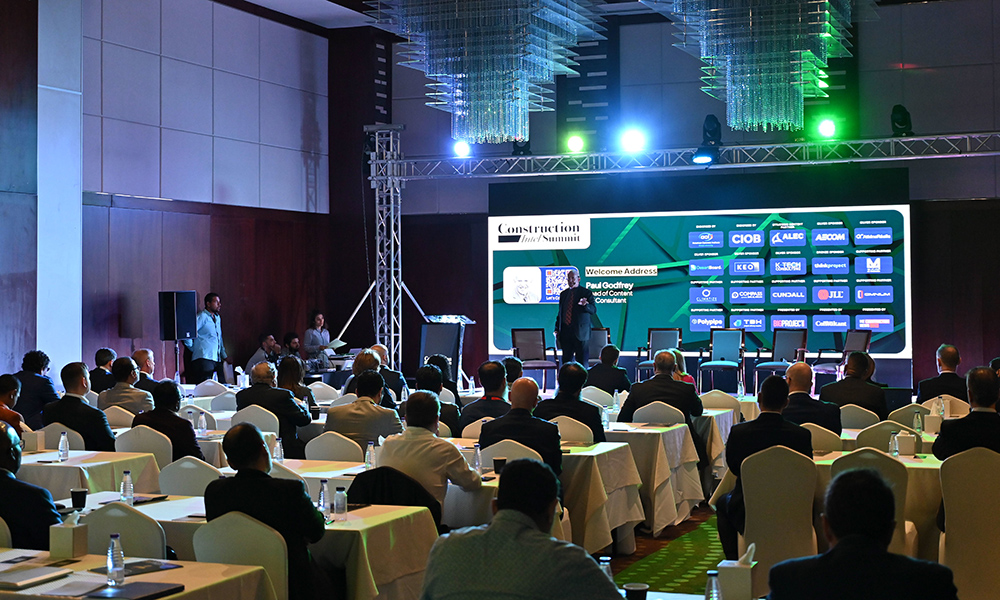
The Big Project Middle East and Middle East Consultant editorial teams have confirmed that over 130 individuals attended the 2023 edition of the Construction Intel Summit KSA. The event featured 25 speakers from key regional and international firms, who discussed and debated a variety of topics relating to the vibrant Saudi construction market.

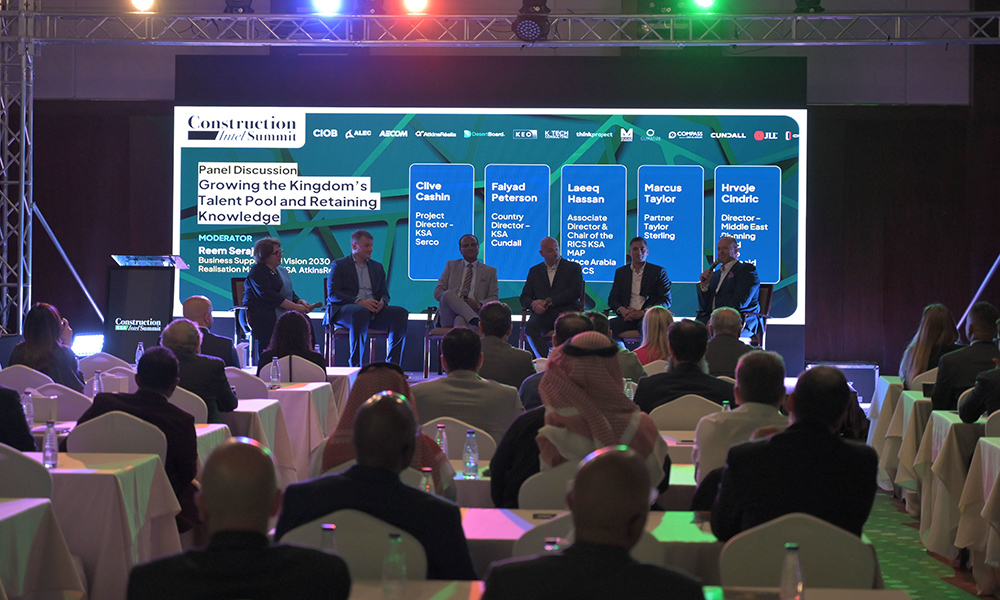
The event opened with a welcome address from Paul Godfrey, Head of Content at Middle East Consultant, following which, the event’s first panel discussion of the day began ‘Growing the Kindgom’s Talent Pool and Retaining Knowledge’. The panel discussed: what players in the built environment have already achieved in alignment with the nation’s focus on Saudisation; is the industry on track to support and achieve Saudisation goals by 2030; what challenges private construction firms face, and what initiatives can the government role out to enable them to develop and retain motivated Saudi talent, and more.

The session was moderated by Reem Seraj, Business Support and Vision 2030 Realisation Manager, Saudi Arabia at AtkinsRéalis, with speakers including: Clive Cashin, Project Director, Saudi Arabia, Serco; Faiyad Peterson, Country Director – KSA, Cundall; Laeeq Hassan, Associate Director & Chair of the RICS KSA MAP / Mace Arabia & Royal Institution of Chartered Surveyor (RICS); Marcus Taylor, Partner, Taylor Sterling, and Hrvoje Cindric, Director – Middle East Planning Lead, Buro Happold.

The session was followed by a presentation from Thinkproject’s Yazan Alshalan, which was titled ‘Unleashing Technology’s Potential for Smart Construction and Operations in Giga Projects’.

The Driving Giga-Project Success panel was split into two parts, with the first focusing on data and the shape of project success. The session was moderated by Paul Godfrey, with speakers including: Allison Wicks, Quality Integration Specialist, Qualitaz; Ben Jackson, Head of Project and Development Services for the Middle East & Africa, JLL; Cary Kopczynski, CEO & Senior Principal, CKC and Nivine Issa, Founder & Managing Director, Terra Nexus.

Polypipe Middle East’s Adam Smith then engaged in a fireside chat with Paul Godfrey on the topic of advanced water management in today’s mega-projects. The session looked at the innovation in drainage and water management that has accompanied the growth in scale of KSA’s projects.

The second part of the second panel discussion, which focused on cost and supply chain then took part. This segment was moderated by Mohamed Moussa, Member of the RICS Engagement Group – KSA / Royal Institution of Chartered Surveyors, KSA, with speakers including: Ahmed Abdelrazek, Senior Consultant, TBH; Darren Burke, General Manager, ALEC Engineering & Contracting; Fernando Freitas,  Director, Omnium International Limited; Mitesh Bavdekar, Director, KPM Engineering and Wees Abraham, VP – Operations & Strategy, Shade Corporation.

Following the lunch break, another fireside chat took place. Here, Paul Godfrey spoke to Paul Sweeney, Development & Program Director at Compass Project Consulting about the key initiatives and focus areas that businesses need to invest in, if they are to successfully drive forward challenging giga-project timelines and deliver the complex matrices of project management.

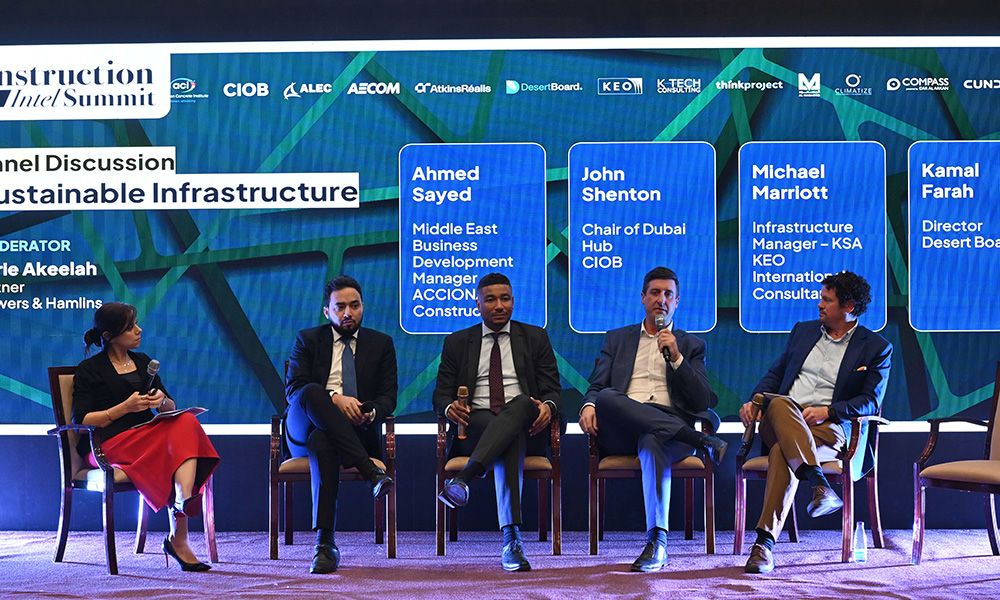
The final panel discussion of the day took a deep dive into ‘Sustainable Infrastructure’ in the Kingdom. The session discussed the current state of urban infrastructure development within the Kingdom’s giga-projects and how some of the issues that have arisen have been tackled; what has been planned in terms of sustainable energy and water infrastructure and what has been delivered; the development of next generation mobility solutions including air taxis, and more.

The session was moderated by Karie Akeelah, Partner, Trowers & Hamlins with speakers including: Ahmed Sayed, Middle East Business Development Manager, ACCIONA; John Shenton, Chair of Dubai Hub at CIOB; Michael Marriott, Infrastructure Manager – KSA, KEO International Consultants, and Kamal Farah, Director, Desert Board.

The final presentation of the day was delivered by Jens Otterstedt, General Manager, Al Masaood Bergum on modular construction and how it is enabling dramatic improvements in the speed of construction and brings many advantages, and can also provide significant advantages in terms of sustainability.

The 2023 Construction Intel Summit KSA was supported by:

Strategic Content Partner: ALEC Engineering & Contracting
Silver Sponsor: AECOM, AtkinsRealis, Desert Board, KEO, K Tech Consulting,
Bronze Sponsor: Thinkproject
Supporting Partners: Al Masood, Climatize, Compass Project Consulting, Cundall, JLL, Omnium, Polypipe, TBH Consultancy
Endorsed by: Chartered Institute of Building, American Concrete Institute

To learn more about the 2023 Construction Intel Summit KSA, please click here.

The post 2023 Construction Intel Summit KSA records over 130 in attendance appeared first on Middle East Construction News.

Source: MEConstructionNews


Katarina-Uherova-Hasbani-Partner-Global-Director-of-Strategy-and-Advisory-AESG_1000x600.jpg

December 1, 2023 valueeng0

COP28 is upon us. Dubai has prepared to host more than 70,000 delegates and world leaders in their latest round of debate and collaboration over climate matters. Through my work with regional governments, industry associations and private enterprises I know that brought to the table will be discussions around the areas that have the most impact and potential for yielding practical outcomes. Foremost among these will be the strategies to reduce the  carbon emissions associated with infrastructure, including the built environment, which is collectively responsible for an estimated 79% of the global total.

Blueprints for success

With buildings being behind 39% of the world’s energy-related carbon emissions, it is no question that the sustainability of the construction sector will be a top focus for participants at COP28. A successful conference would be one in which steps are clearly outlined for stakeholders to take practical action for infrastructure and buildings included. These measures must allow for the regeneration and preservation of the natural environment and provide fair treatment to those that are exposed to climate change impacts, while creating economic value for future generations.

This may seem like a tall order, but it isn’t unattainable. A sustainable, low-carbon world is possible. We have the tools and the expertise to create it. We can design, develop, and operate our built environment using a lifecycle approach, where we account for the whole lifetime of an asset and its associated carbon and costs. We must collaborate, we must raise awareness, we must build capabilities, and we must share budgetary requirements and risks while identifying opportunities for mutual action. Perhaps most importantly, we must remember that asset decarbonisation is a process, not an outcome. We must monitor progress, be transparent about our restraints, and redesign our efforts as we go.

Laying foundations for a greener future

Building and infrastructure designs are evolving. They now integrate environmental sustainability and low-carbon solutions, including reducing virgin materials and energy demand, and eliminating fossil fuels. Modern designs also incorporate circularity principles and sequester carbon where possible. We see industry certifications such as LEED, PAS2080, EDGE, International Living Future Institute, BREAM, and others set better standards for net-zero journeys. And through closer collaborations between clients and consultants, we are seeing costs starting to fall in projects such as MC2 Masdar City Campus and Expo City, which is hosting COP28 delegates.

In the construction and commissioning phases we also see this incorporation of sustainability and decarbonisation principles. Organisations have begun to focus on materials, energy and water usage, and waste management throughout construction. We are seeing, for example, more electrification of equipment. We also see efforts to reduce transportation, including employee and contractor commutes, and to introduce more efficient vehicles and equipment. Additionally, projects are improving how they use water, including going so far as to recycle it on site. And we also see the recycling of construction waste materials, which are reused in interior design or some structural elements. What is most encouraging is that clients’ tender requirements are what is driving these changes. Costs are now increasingly shared between client and provider, which is a model that is less likely to break down than if one party bore the burden.

Once in operation, buildings can benefit from enhanced management practices in energy, water, and waste, based on measurement, optimisation, and the selection of alternative pathways. For energy, these alternative pathways lie in the procurement of renewable power and the reduction of fossil-fuel usage. For water, pathways include local recycling and reuse. For waste, we must repair, reduce, reuse, and recycle. If we want to see sustainable, low-carbon assets, we must invest in high-performing automation, digitisation, and predictive practices. We have seen sustainable building operations deliver cost savings in the range of 10% of the costs of business-as-usual practices. We also see low-carbon businesses reduce their maintenance costs and improve their overall wellness and user experiences.

Policies will underpin success

All this change will not happen in a vacuum. We need governments to set policies and regulations to drive the sustainability agenda and incentivise low-carbon performance of new and existing construction projects. At COP28, as they work to define the objectives that will translate to the ground rules, governments have an opportunity to show the direction and path of changing technical specifications and the needed improvements in the value chain. From the government end comes the catalyst, spreading awareness from middle to executive management, and explaining how capacity-building is needed to make our climate goals a reality. Strong leadership and information sharing will underpin the success of these capacity-building exercises.

Once robust corporate policies are set in place, it will come down to the diligence of managers to augment procedures as envisioned. From the boardroom down to individual projects, a new culture must emerge, pervading scope, principles, responsibilities, and updates. Procurement, energy and water usage, and waste and materials management will all need to be transformed. And if “transformed” evokes images of digitalisation, it is because technology provides an obvious means of streamlining the emissions-reduction program. Data and AI together present an incredible opportunity for advanced analytics to drive the design, delivery, and operation of efficient, sustainable, and smart built assets.

Watch this space

It is possible to get where we need to be on sustainable buildings and infrastructure. But I cannot emphasise enough that a more resilient world is only Mission Possible with the right partnerships – partnerships where the line between client and provider is blurred; partnerships where risks are shared; partnerships where governments continue to lead, where financiers focus on long-term value creation, and where new technological innovations support our vision. As COP28 commences, I – and I’m sure my peers in the construction industry – are optimistic that conference participants will seek to create the frameworks that will enable these partnerships to form and flourish.

The post Mission possible: Setting construction on course for building a more resilient world appeared first on Middle East Construction News.

Source: MEConstructionNews

Rail-infrastructure_1000x600.jpg

December 1, 2023 valueeng0

A survey conducted by Assystem has revealed that over half of infrastructure projects around the world fail to meet time, cost and quality objectives. The survey of over 700 project control professionals working globally on transport, energy and urban development projects, revealed only 47% of projects worldwide achieve time, cost and quality objectives.

Project controls professionals provide guidance and assistance to project managers for the resolution of complex engineering project controls issues, and help with the planning, scheduling, cost analysis and monitoring for major engineering programs or high visibility projects, the firm said.

Skill shortages, limited investment and a lack of uptake in technology, innovation and data production/analysis were cited as major reasons for failure. Only 23% of projects and portfolios believe their teams have all the necessary skills to perform their function successfully.

The survey also revealed that investment levels present a significant challenge to project delivery, with uncertainty around financial backing for major projects causing scheduling delays, which cause project inefficiencies and cost increases in turn.

“While some of the challenges facing the infrastructure sector are systemic, the silver lining is that there are means to improve project success rates available in the short to medium term. Today, technological advancements, particularly assets such as digital twins, powerful data-rich dashboards, and artificial intelligence, have the potential to revolutionise project management and turn the tide on the global infrastructure challenge,” said Kevin Corcoran, Senior Business Unit Director for Transport and Infrastructure, Assystem.

Respondents said digital transformation is a key driver of successful delivery, with confidence doubling when projects are paired with a digital delivery plan, noting that such cutting-edge solutions require initiative and investment to adopt and deploy them effectively.

The post Assystem report reveals majority of infrastructure projects fail appeared first on Middle East Construction News.

Source: MEConstructionNews